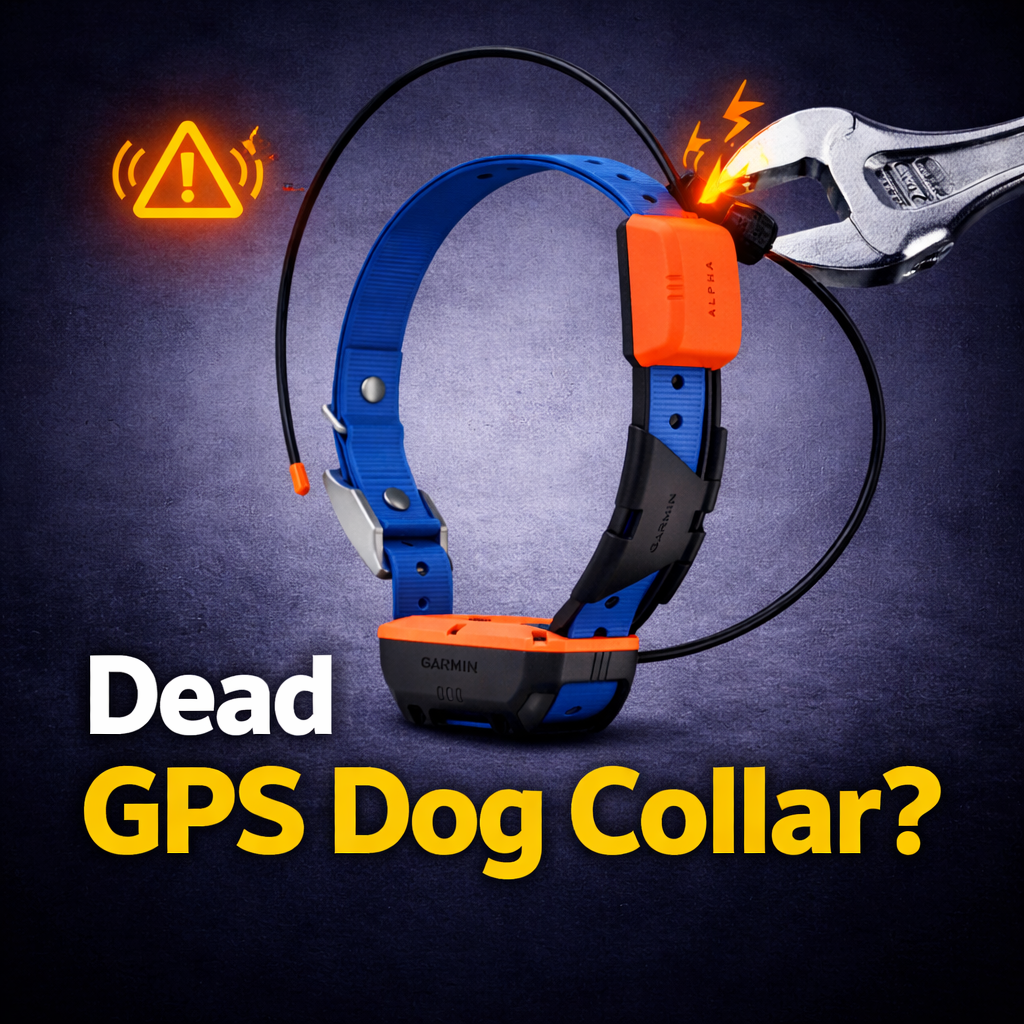
Your Tracking Collar Survived the Swamp Last Season… But Now It Won’t Power Up.
(Here’s What’s Really Going On – and How Mad Lab Repair Can Save It)
You invested in a premium GPS or training collar because when your dog is out of sight in heavy brush, you need to know exactly where they are. Whether you run a Garmin TT15 on a hunting hound, a SportDOG rig for waterfowl, or a heavy-duty Dogtra system on a working farm dog, that collar is a critical piece of gear. But right now, heading into the season:
- It won't take a charge, no matter how you wiggle the clip.
- The battery says it’s full, but dies after 30 minutes in the field.
- The GPS signal keeps dropping out.
- The charging pins are completely rusted over or snapped off.
On paper, this is rugged, waterproof, professional-grade tech. In practice, it currently feels like a $300 piece of dead plastic sitting on your workbench.
This blog is for that exact symptom: Premium GPS and working dog collars that refuse to charge, won't hold a battery, or have broken physical connections. (Mad Lab Repair is not affiliated with Garmin, SportDOG, or Dogtra. We just see a massive pile of these broken collars that manufacturers either charge a fortune to replace out-of-warranty or refuse to service at all.)
Quick Fix? Probably Not. Quick CTA? Yes.
If your collar is totally unresponsive or the charging clip won't make a connection, there’s a massive chance the problem is a dead internal lithium cell or corroded charging contacts on the motherboard—not just a software glitch.
👉 Skip the headache: Mad Lab Repair can usually revive these by replacing the internal battery, micro-soldering new charging pins, and properly resealing the unit, saving you from buying a brand-new collar.
- Mail‑in, device-sized box
- Free diagnostic
- You either get it fixed, or it comes back unchanged.
Use our Free Repair Quote form and tell us the brand, model, and exact behavior.
FIRST THINGS FIRST: When to Stop Immediately
These collars pack high-drain lithium-ion batteries inside a tightly sealed waterproof case. When that goes wrong, it needs to be handled carefully.
Unplug the collar and stop trying to force it to charge right now if:
- The plastic housing is visibly swelling, bulging, or splitting at the seams. This means the lithium battery inside has off-gassed and inflated like a balloon. It is a severe fire hazard.
- The casing has a massive crack and it recently went swimming. If swamp water got inside the housing and mixed with the battery pack, do not plug it into the wall. It will short circuit immediately.
- The unit gets physically hot to the touch while sitting on the charger. Those are signs of catastrophic internal failure. Let a repair lab handle it safely before it pops.
What This Problem Looks Like in Real Life
Here is the cluster of symptoms we see from hunters and working dog owners all the time:
- “The charging clip is on, but the light won't turn red.”
- The gold charging contacts on the collar itself have either worn completely flat or corroded away from mud and moisture, meaning power can't physically reach the battery.
- “It worked great last winter, left it in the truck, now it’s totally dead.”
- Lithium batteries degrade incredibly fast when left at 0% charge in freezing temperatures (or a scorching hot truck cab) for eight months. The cells are essentially dead on arrival.
- “The GPS antenna is flapping in the breeze.”
- Your dog ran through a thicket of briars and snapped the internal solder joint where the antenna connects to the main circuit board. The collar turns on, but it can't find a satellite.
What People Think It Is vs. What’s Actually Failing
The usual guesses
Most owners assume:
- "The charging cable must be bad." (Sometimes true, but if a new cable doesn't fix it, the collar's internal port or pins are shot).
- "It just needs a software update." (You can't update a collar that your computer won't recognize because the data pins are corroded).
What’s really going on inside
Under the hood, these collars are highly sensitive radio transmitters sealed inside a plastic brick. They suffer from two major physical failures:
- The Elements: Mud, swamp water, and dirt get trapped between the charging clip and the collar. Over time, the electrical current combined with moisture causes galvanic corrosion, literally eating away the metal charging pins.
- Battery Neglect: The off-season is the ultimate killer of GPS collars. Sitting completely uncharged for months destroys the internal resistance of the battery pack.
Why This Happens So Much With Premium Collars
These are tough devices, but the life of a working dog is tougher.
- The Abuse: They get dunked in freezing water, slammed against rocks, and chewed on by other dogs in the truck box.
- The Wear and Tear: The physical act of snapping a stiff plastic charging clip onto the collar hundreds of times eventually wears down the contact points.
- The Replacement Trap: When a $350 collar dies outside of its 1-year warranty, manufacturers often offer a "refurbished replacement" that still costs $150 to $200. We think replacing a $15 internal battery shouldn't cost you $200.
That’s where Mad Lab Repair comes in.
Can You Fix This at Home?
You can safely try a few basic things before mailing it in:
Check the simple stuff:
- Take a Q-tip, dip it in high-percentage rubbing alcohol (isopropyl), and scrub the metal charging contacts on both the collar and the charging clip. Often, a layer of invisible grime is blocking the connection.
- Look up the "Master Reset" button combination for your specific model (usually holding the power button for 10-20 seconds or pressing a specific sequence).
At that point, we do NOT recommend:
- Prying the collar apart with a screwdriver to check the battery. You will absolutely destroy the waterproof gasket. The next time your dog hits a puddle, the motherboard will fry.
- Trying to solder a broken GPS antenna back together with a garage soldering iron. You will melt the plastic housing and permanently ruin the board.
What Mad Lab Repair Actually Does With These
When you send a dead GPS collar to Mad Lab Repair, we treat it like the essential field gear it is.
- Safe Entry & Gasket Preservation: We carefully crack the watertight seals without destroying the housing. We test the battery voltage and inspect the main board for water damage.
- Micro-Soldering & Pin Repair: If the charging pins are corroded or worn flat, our micro-soldering experts can rebuild or replace those contacts.
- Battery Swaps: We safely remove degraded off-season batteries and install fresh, high-capacity cells.
- Watertight Resealing: We reassemble the unit using the correct sealants and gasket treatments so it’s completely waterproof and ready for the swamp again.
The goal: you get your exact collar back, holding a charge perfectly, for a fraction of the cost of buying a new one.
Why You Shouldn’t Just Ignore It
Letting this problem ride has serious downsides:
- Losing Your Dog: If a battery has high internal resistance and suddenly dies while your dog is three miles out in heavy timber, you are flying blind.
- You’re Throwing Away Good Gear: The heavy-duty straps, GPS chips, and thick plastic housings are perfectly fine. Trashing a $350 unit because of a worn-out battery or a corroded charging pin is a massive waste of your hard-earned money.
What You Should Do Right Now
Step 1 – Quick self-tests
Scrub the charging contacts with rubbing alcohol, try a master reset, and test it with a buddy's charging clip if you can.
Step 2 – Let Mad Lab Repair take it from here
Use our Free Repair Quote form and tell us your exact model (e.g., Garmin TT15, Alpha T20, SportDOG TEK) and exactly what it's doing.
- We reply with shipping instructions and a ballpark expectation.
- We diagnose, then you decide if you want to go ahead with the repair.
You already paid for professional-grade tracking gear. You shouldn't have to buy a whole new collar just because it sat in the garage too long.
Bottom line:
If your GPS dog collar won't take a charge or dies in the field, it is almost always fixable. Mad Lab Repair exists to catch these “throw it away” devices, open them up safely, and give them a second life—so you can get back to the hunt with peace of mind.
Get A Repair Quote!
Broken device? Tell us what’s going on and we’ll diagnose it, estimate the repair, and walk you through the next steps. Fast, honest, no pressure.

%20(7).png)