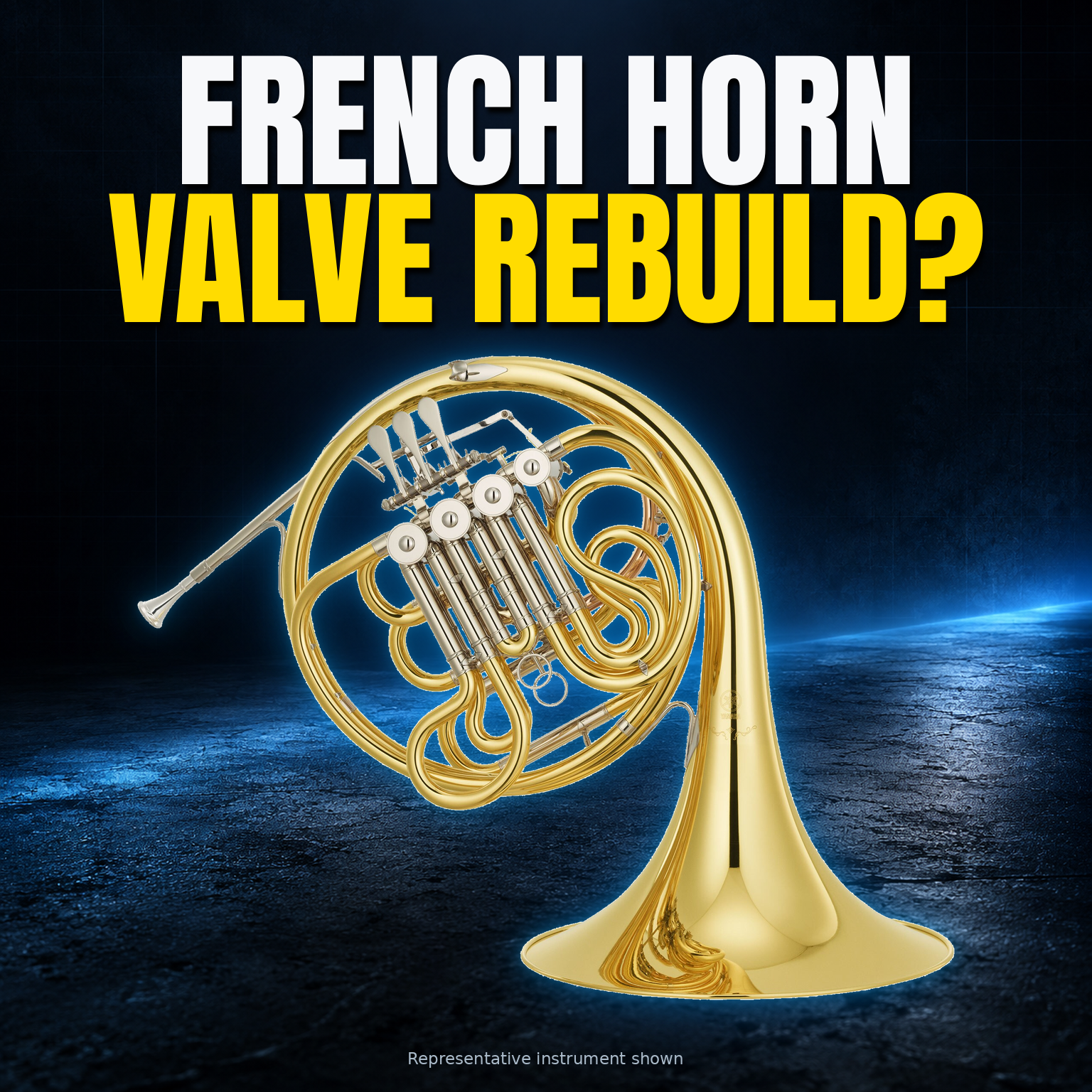
French horn • Repair decision
A technician has recommended a valve rebuild, but you like the horn you already have. Before approving the work, you need to know what it would fix, whether the proposed method suits this particular instrument, and how the complete cost compares with a working horn you would actually want to play.
A rebuild can be worth considering when the assessed condition justifies it and keeping this horn still makes sense. Cleaning, bearing or action work, repairs elsewhere on the horn, a maker-specific parts route, replacement, or a pause may be better answers. Ask for a written recommendation that separates the necessary work from optional changes and explains the limitations that would remain.
This guide is for owners of professional and advanced-player double French horns who already have a qualified assessment or competing recommendations. It does not determine whether your valves need rebuilding. Student horns, single horns, triples, descants and unusual valve systems need their own assessment; the same repair approach may not apply.
Find out what the recommendation would actually fix
Start with the findings, rather than the name of the service. Ask the assessor to distinguish three things:
- Valve sealing: what was found at the rotors and their casings, and why does it justify the proposed work?
- Bearing fit and action: what explains looseness, noise or movement problems, and could those findings be addressed without a full sealing-surface rebuild?
- The assembled horn: were relevant slides, joints, the receiver and the body assessed for separate problems that would affect the result?
Several faults can coexist. A valve-only quote needs to explain whether additional work is necessary before the horn can deliver the intended result. Ask which findings are established, which need further inspection and which remain uncertain.
If a compression or leak reading is part of the recommendation, ask what was measured and how that result supports the scope. The test setup matters: a number from one shop may not be directly comparable with another shop's number. There is no universal reading in this guide that tells you to authorize a rebuild.
A useful explanation connects the findings to your concern as a player. What improvement is the work intended to make? What might remain unchanged? A tighter seal does not guarantee that you will prefer the horn's response afterward.
Check the method against this horn's valve system
Ask why the proposed method is appropriate for the exact maker, model and valve design, including the condition of both the rotors and casings. Tell the repairer about previous valve work or alterations, even if all you have is an old invoice or an incomplete service history.
Maker advice and specialist repair advice can differ. A shop may offer a plated rebuild while a maker recommends a replacement-rotor route for its own design and cautions against that treatment. Neither position should be generalized to every horn. A successful rebuild shown on a different instrument does not establish that the same work is right for yours.
Where the advice conflicts, ask both parties how their recommendation applies to your actual instrument. Is the disagreement about the valve system, existing damage, previous work or the expected result? What additional finding would settle it?
Pause irreversible work if a material disagreement remains. Seek an independent assessment from someone qualified for that valve system. Ask what condition would cause the proposed repairer to change the scope or stop rather than continue. A maker-specific assessment or parts option is worth investigating, but availability and acceptance must be confirmed.
Compare keeping your horn with a real working alternative
Be specific about what you want to keep
A familiar horn can have qualities that are difficult to replace: the response you know, the sound you want, workable intonation, comfortable handling and suitability for the music you play. Write down the qualities that matter before you compare bills.
Then separate those preferences from the proposed mechanical result. Ask the repairer what the work is expected to change and what cannot be promised. Keeping a valued instrument may justify a substantial expense for you, but the word “professional,” its age or its original purchase price cannot make that decision on its own.
Choose a replacement you could actually use
Compare your horn with a complete, suitable double horn for the same playing role. An inexpensive student single, an unassessed bargain or a bare valve assembly is not a useful substitute. Equally, selecting only an expensive premium replacement can make repair look more economical than it really is.
For each realistic candidate, establish its condition, service history, included components and availability. Clarify what “serviced” covered. Check the seller's trial or return terms, including deadlines, fees and transport responsibilities, before relying on a chance to try it.
Where a trial is available, use your normal setup and musical requirements. A matching model name does not guarantee the same feel or condition. If a particular maker, era or response is central to your choice, make that requirement explicit. Keep a lower-priced suitable alternative in the comparison when you find one.
Compare the complete costs
Use written figures where available and leave unknown amounts marked as unknown. A menu price for valve rebuilding is not the total cost of putting your particular horn back into use.
- Keeping your horn: include the proposed necessary work, any separate body or component repairs, applicable assessment charges, transport and coverage for both journeys, and any agreed follow-up costs. Check whether an assessment charge is included or credited so you do not count it twice.
- Buying the alternative: include the actual instrument price, applicable transaction costs, trial or return costs, shipping and any immediate service it needs. Deduct credible as-is sale or trade proceeds from your current horn only if you intend to sell or trade it.
- Outside the baseline: separate optional cosmetic work or modifications from repairs needed for your intended use. Include them only if you want them, rather than treating them as part of a mandatory rebuild.
Time away from playing, uncertainty and personal attachment belong beside the cash comparison. There is no repair-to-value percentage that works for every owner, and you should not assume a repair bill will be recovered on resale.
Choose an outcome, then define the authorization
The comparison should leave you with a decision about this horn, not an automatic progression to the largest service.
- Limited work or qualified local care: the assessed problem can be addressed without a full rebuild, and the remaining condition supports your intended use. Confirm what remains outside the scope.
- A full rebuild and any necessary separate repairs: the findings justify the work, the method fits the instrument, and you still want to keep it at the complete cost and agreed uncertainty.
- A maker-specific route: the design, prior work or unresolved method question warrants assessment by the maker or someone qualified for that system. Confirm parts and acceptance before committing.
- A suitable working replacement: a checked alternative meets your playing needs on more acceptable overall terms. Price alone is not enough to establish that.
- Decline: the expected result would not justify the expense, the horn would still be unsuitable or the feasibility is unacceptable. If a shop already has it, confirm assessment, reassembly and return charges before closing the job.
- Defer: you need an unresolved technical answer, a better replacement comparison or a workable performance schedule. Ask the assessor what can responsibly wait; deferring a decision does not establish that continued playing is harmless.
Before work begins, put the agreed scope and price or estimate in writing. Identify exclusions, the findings that require another decision and the point at which the repairer must contact you before proceeding. Ask what you would owe if further inspection changes the recommendation and you decline the revised work.
Plan for the horn's return before sending it away
Give the repairer your real performance or audition deadline and confirm the individual appointment, expected time away and time to evaluate the returned horn. Do not plan around an assumed queue, rush service, loaner or fixed adjustment period. Ask what happens if the schedule changes.
Agree how completion will be documented against the original findings. Ask how to report a concern about valve action, response or a remaining leak after return, what follow-up terms apply and who pays any further transport costs. Mechanical checks and your experience of playing the horn both matter; neither should be treated as a promise of a particular feel.
If shipping is involved, confirm that the recipient accepts your exact instrument and proposed work before arranging transport. Obtain that recipient's current instructions for your horn, case and bell configuration. Do not improvise disassembly or rely on a generic packing recipe.
Clarify responsibility and applicable transport coverage for both journeys, including any conditions or exclusions. A declared value alone does not establish a guaranteed payment if something goes wrong. If safe transport, timing or a workable return-evaluation arrangement cannot be established, keep qualified local care, a maker route or deferral on the table.
Ask about an assessment for your horn
Include the make and exact model, known valve or body work, any existing assessment or proposal, what you want to retain about the horn and any performance deadline. Share accessible photos and existing paperwork only; do not remove rotors, force parts or perform home pressure tests to support a request.
Requests are reviewed case by case. Any available assessment route, acceptance, applicable charges, timing and instructions must be confirmed before you send an instrument. Inspection may be needed to establish scope and price, and work requires your approval. Contacting us does not confirm specialist availability or a repair booking; the maker, your previous repairer or qualified local care may be the appropriate next step.