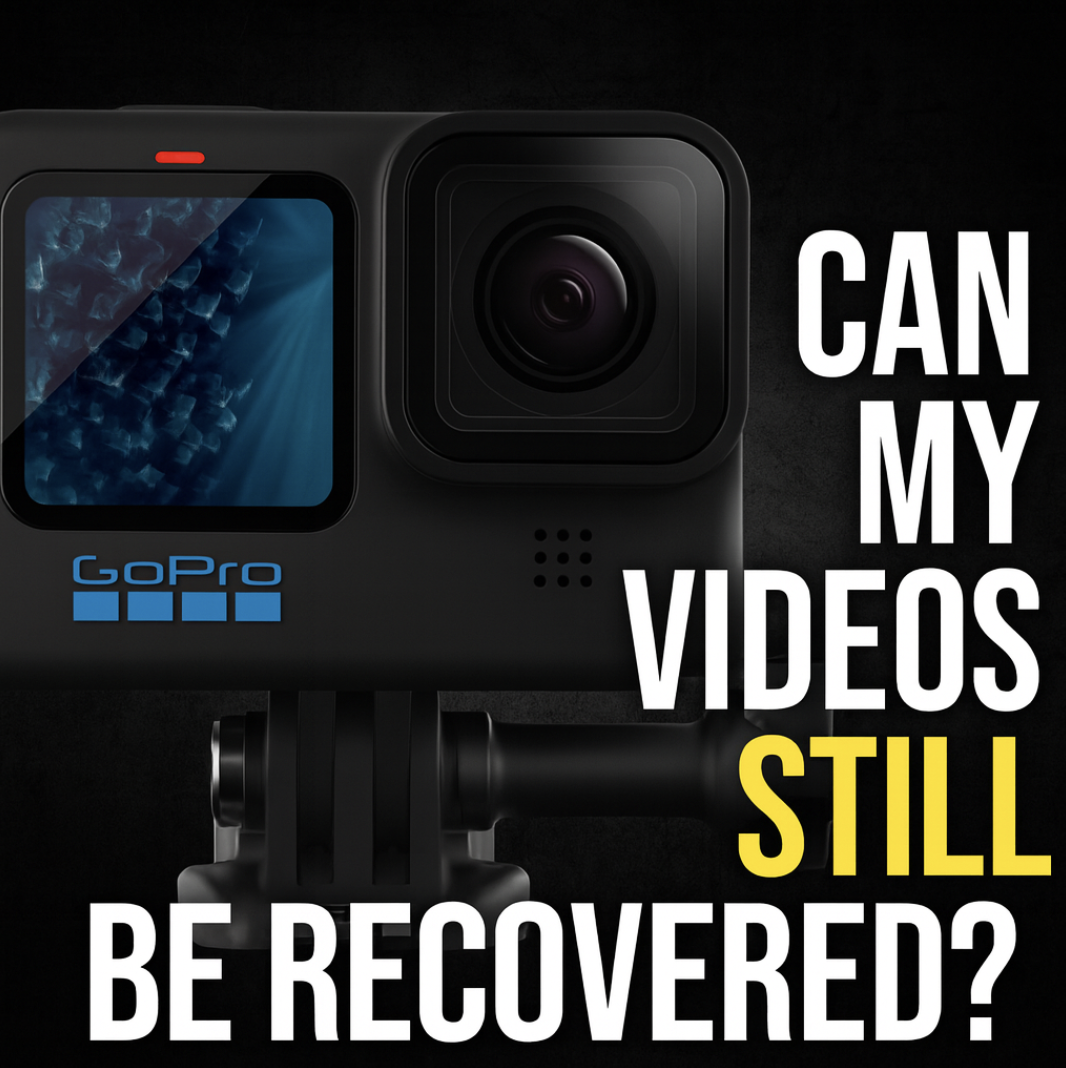
If you’re seeing “SD card needs to be formatted” (or your GoPro shows SD ERR), the good news is: your videos may still be recoverable. The bad news is: formatting is the fastest way to turn a recoverable situation into a much harder one.
GoPro’s own support community is blunt about this: an SD ERR is usually corruption, and formatting the card in the camera won’t fix SD card corruption. GoPro Community
Yes, recovery is often possible—especially if you stop using the card immediately.
Your best move is to power down, remove the card, and avoid formatting until you’ve recovered the files or had a lab evaluate it.
That “needs to be formatted” prompt usually means one of these happened:
GoPro explicitly recommends using microSD cards with V30 and A2 ratings (depending on model) to avoid performance-related issues. GoPro Community
If your footage matters, avoid these “common fixes” for now:
Formatting an SD card rebuilds the file system and can erase access to existing files. Reolink
Power off the GoPro and remove the microSD. Every new write can overwrite recoverable video data.
Use a known-good USB microSD reader (or your computer’s built-in reader). Avoid cheap adapters. Sometimes the “format” message is a reader/connection issue, not total corruption.
If the card is failing, you want to capture what’s readable once and work from the copy (not the original). (This is what pros do first.)
If the card is still recognized, recovery software can sometimes pull MP4 chunks or reconstruct directory structures. The key is: read-only first, do not “repair” the card.
If:
…that’s where professional recovery is usually the right call.
Only after you’ve recovered what you need and you’re okay losing anything else.
Also: formatting is for reusing a card, not “fixing” corruption. GoPro support community responses repeatedly note that in-camera formatting is essentially a quick format and doesn’t resolve true corruption. GoPro Community+1
Sometimes, yes—especially after a quick format, before new recordings overwrite the data. But your odds usually drop after formatting because the file tables get rebuilt and the card starts reusing space. Reolink
If you already formatted: stop using the card immediately and treat it like an urgent recovery case.
We don’t ask you to gamble with DIY steps when the footage matters. If you submit your situation (GoPro model + card capacity/brand + what message you see), we’ll route you to a professional data recovery partner that handles:
Important: no one can promise 100% recovery until the card is evaluated—but the biggest controllable factor is what you do right now: don’t format, don’t write, don’t “repair”.
What’s the most common cause?
Corruption during recording (power loss/crash) or using a card that can’t keep up with the write speed. GoPro recommends V30/A2-rated cards for many models. GoPro Community
Is this a GoPro problem or an SD card problem?
Usually the card/file system, but GoPro’s write demands can expose weak or counterfeit cards fast.
Should I just format it in the GoPro like it suggests?
Not if you care about the footage. GoPro community guidance indicates SD ERR typically means corruption and in-camera formatting won’t fix corruption. GoPro Community
If your GoPro microSD is asking to be formatted and the footage matters, treat it like a “do no harm” situation: stop, isolate, recover (or escalate).
Submit your case to Mad Labs Repair and we’ll point you to the right recovery path based on your exact symptoms (and your card type).
%20(7).png)
Fix what’s worth keeping.
Copyright © 2025 Mad Labs Repair. All Rights Reserved