%20(6).png)
Last updated: June 8, 2026
Plumbing Problem in Lake City? First Figure Out If It’s a Drain, Sewer Line, Water Heater, Water Line, or Septic Issue
Plumbing problems can get confusing fast. A toilet gurgles, a shower backs up, the water heater leaks, the hot water disappears, or the yard gets wet near the water line. At first, it all feels like one big plumbing mess.
The next step depends on what is actually happening. One slow sink is different from several drains backing up. A leaking water heater tank is different from a bad thermostat. A home on city sewer may need a different call than a home on septic.
This guide helps Lake City and Columbia County homeowners sort the symptoms and ask better questions before approving a repair.
Match the symptom to the right kind of help
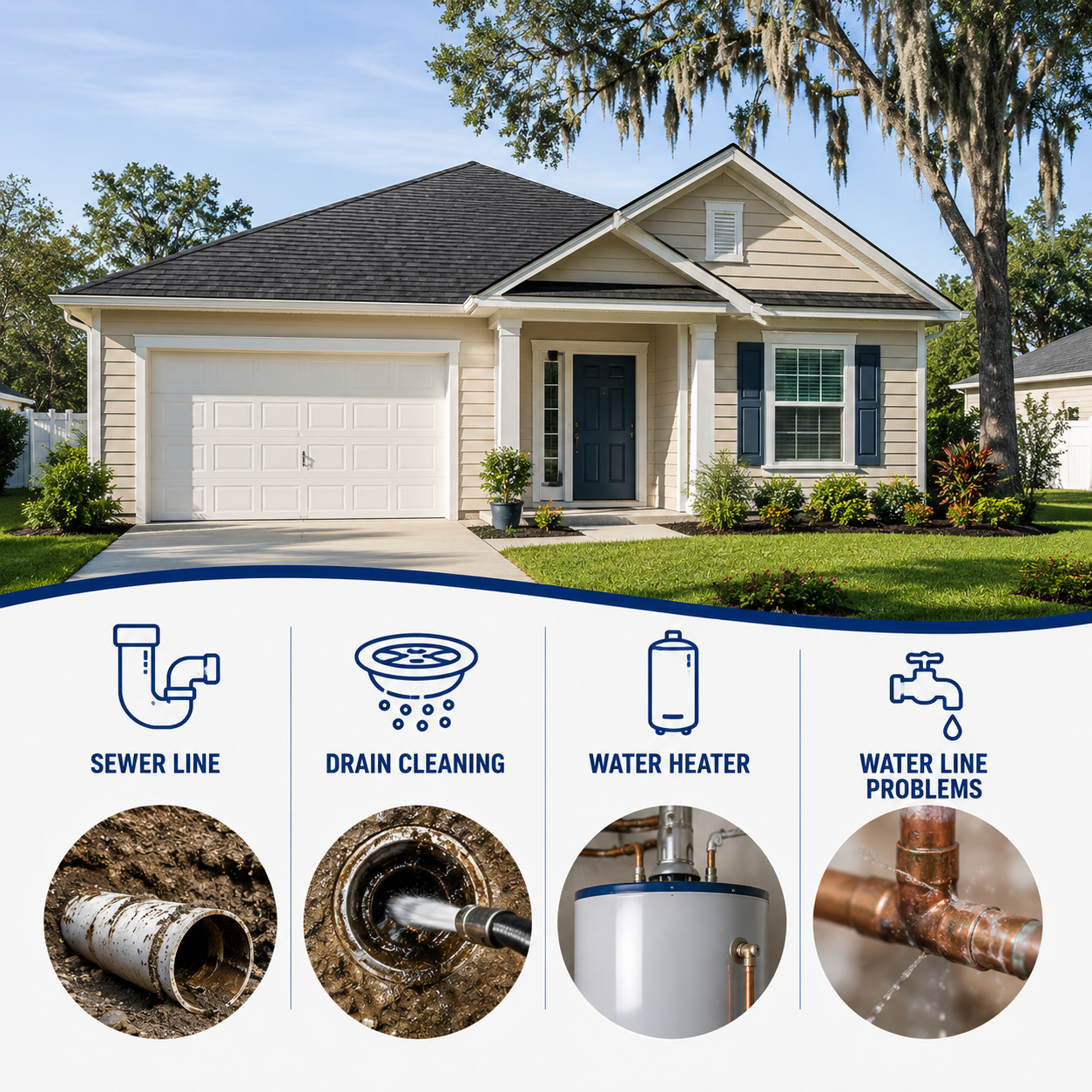
A drain clog, sewer backup, septic issue, water heater leak, low-pressure problem, and water-line leak can all feel urgent, but they do not always need the same fix.
Some plumbing problems should not wait
A dripping faucet can usually wait. Sewage backing up into the house, water pouring near electrical equipment, a leaking water heater tank, or a gas smell cannot be treated like a normal service call.
Safety note: if there is sewage exposure, gas odor, flooding, electrical danger, or an unsafe situation, call the appropriate emergency or licensed professional right away.
What your plumbing symptom may point to
The symptom does not prove the cause, but it helps narrow the next question. A plumber may still need to inspect, test, snake, camera, or isolate the system before anyone knows what is actually wrong.
| What you notice | What it may point to | Good question to ask |
|---|---|---|
| One sink or tub drains slowly | Local clog, hair, grease, trap issue, fixture drain issue, or venting problem. | “Is this only one fixture, or is the main drain showing signs too?” |
| Several drains are slow | Main drain clog, sewer line issue, septic backup, root intrusion, grease buildup, or venting issue. | “Should the main line be checked before treating this like a small clog?” |
| Toilet gurgles when shower or laundry runs | Main drain restriction, sewer or septic issue, venting issue, or backup beginning to form. | “Is the gurgling coming from air trapped by a blocked drain line?” |
| Water backs up into tub or shower | Main drain, sewer lateral, septic system, or serious blockage. | “Is this wastewater, and should we stop using water until it is checked?” |
| Sewage smell inside or outside | Dry trap, vent issue, sewer gas, main line trouble, septic issue, or failing seal. | “Is this a drain smell, sewer smell, or septic symptom?” |
| No hot water | Element, thermostat, breaker, gas control, pilot, igniter, tankless error, or failed unit. | “What part failed, and is replacement actually needed?” |
| Water heater is leaking | Tank leak, valve, fitting, expansion issue, drain valve, supply line, or pan/drain issue. | “Is the tank itself leaking, or is the leak from a replaceable part?” |
| Low water pressure | Pressure regulator, clogged aerators, water-line leak, utility issue, well issue, valve issue, or buildup. | “Is pressure low at one fixture, one side of the house, or everywhere?” |
| Wet yard or high water bill | Main water-line leak, irrigation leak, meter-side issue, septic/drainfield issue, or underground pipe leak. | “Is the water meter moving when everything is off?” |
Plain English: “the plumbing is acting up” is a start, but “the tub backs up when the washer drains” is much more useful. The pattern tells the story.
One drain is different from a whole-house backup
If one bathroom sink is draining slowly, the issue may be right there at the fixture. If toilets gurgle, tubs back up, or multiple drains slow down at the same time, the problem may be farther downstream.
| Pattern | Usually means | Possible next call |
|---|---|---|
| One bathroom sink is slow | Likely local fixture clog, trap issue, stopper, hair, soap buildup, or small branch drain issue. | Plumber or drain-cleaning service. |
| Kitchen sink backs up | Grease, food buildup, disposal issue, branch line clog, or local drain problem. | Plumber or drain-cleaning service. |
| Toilets and tubs are involved | Possible main drain, sewer line, septic, or larger blockage. | Plumber with main-line equipment, or septic contractor if the home is on septic. |
| Backup appears after laundry drains | Main line restriction, septic issue, venting problem, or heavy water discharge revealing a clog. | Plumber, drain specialist, or septic contractor depending on the system. |
| Backups keep returning | Recurring obstruction, roots, sagging pipe, broken pipe, grease, septic issue, or improper slope. | Ask whether sewer camera inspection or septic evaluation is appropriate. |
Sewer line, main drain, or septic? That detail changes everything
In Lake City and Columbia County, not every home is on the same wastewater setup. Some homes are connected to city sewer. Others use septic systems because municipal sewer is not available at the property. Some properties may have city water but septic, or a private well and septic.
That matters because a sewer-line problem and a septic-system problem can look similar inside the house. Toilets may gurgle, drains may slow down, and wastewater may back up, but the right professional may be different.
Do not assume sewer and septic are the same thing. A plumber may clear a main drain, but a septic tank, drainfield, pump, or onsite wastewater issue may require a septic professional and different permitting rules.
Drain cleaning, camera inspection, hydro jetting, or sewer repair?
Drain tools are not all the same. A snake may clear a simple clog. A camera may show why a clog keeps returning. Hydro jetting may clear heavy buildup in certain lines. Sewer repair may be needed if the pipe is broken, collapsed, offset, or invaded by roots.
| Service | When it may come up | Question to ask |
|---|---|---|
| Drain snaking / augering | Common for clogs in sinks, tubs, toilets, and some main-line blockages. | “Did the line clear fully, or is there a sign the clog may return?” |
| Sewer camera inspection | Useful when main-line clogs repeat, the location is unknown, roots are suspected, or a repair quote is large. | “Can you show me the video and explain what part of the pipe I am seeing?” |
| Hydro jetting | May be used for grease, sludge, buildup, or certain main-line restrictions when the pipe can handle it. | “Is the pipe in good enough condition for jetting?” |
| Sewer-line replacement | May apply when the pipe has serious collapse, repeated failures, severe root intrusion, poor slope, or old material issues. | “Is replacement the only option, and what evidence supports it?” |
| Septic service | May be needed if the home is on septic and backups involve the tank, filter, pump, drainfield, or saturated system. | “Is this actually a septic problem rather than a sewer-line problem?” |
Good question: if a plumber recommends an expensive sewer-line repair, ask what evidence they used: camera video, location, depth, pipe material, cleanout access, repeated clog history, and whether septic has been ruled out.
Water heater repair vs replacement
A water heater problem is not always a full replacement. No hot water can be an element, thermostat, breaker, gas control, pilot, igniter, tankless error, or wiring issue. A leak may be from a valve, fitting, supply line, drain valve, or the tank itself.
| Symptom | Possible issue | Ask before approving work |
|---|---|---|
| No hot water | Breaker, element, thermostat, gas control, pilot, igniter, tankless code, or failed unit. | “What was tested, and is this repairable?” |
| Water around the heater | Tank leak, T&P valve, drain valve, supply line, fitting, condensation, or pan/drain issue. | “Is the tank leaking or is the leak from a replaceable part?” |
| Breaker keeps tripping | Electrical issue, element issue, wiring, breaker, or water intrusion. | “Should an electrician or licensed plumber check this?” |
| Gas smell | Potential gas leak or combustion safety concern. | “Should we leave and call emergency service or the gas utility?” |
| Old unit with major leak | Replacement may be more likely, especially if the tank is failing. | “Does the quote include permit, disposal, pan, expansion tank if needed, code updates, and warranty?” |
Do not guess with gas or electrical problems. If there is gas odor, burning smell, repeated breaker trips, or water near electrical components, treat it as unsafe until a qualified professional checks it.
Water-line leaks, pressure trouble, and wet yards
A main water-line problem can be sneaky. The first clue may be a high water bill, wet yard, low pressure across the house, or a meter that keeps moving when every fixture is off.
Helpful detail: when asking for help, say whether the home is on city water, a private well, or unknown. A pressure problem on a private well may not be the same as a pressure problem on city water.
Permits and licensed plumber questions in Lake City and Columbia County
Not every small plumbing visit turns into a permit issue. A simple clog or small service call may be different from water heater replacement, utility connection, sewer-line work, remodel plumbing, gas-related work, or a larger water-line repair.
Lake City lists permit forms for plumbing, utility connections, and water heaters. Columbia County also has a building department portal for permits, inspections, contractor licensing, documents, forms, and addressing. Rules depend on the job, but it is worth asking early when the work is more than a minor service call.
Careful wording: permit rules depend on the address and scope. If a plumber says “no permit needed,” ask why. If a permit is needed, ask who pulls it and whether inspection is included.
Lake City and Columbia County area notes
The local area matters because the address can affect utilities, septic, wells, permits, travel time, and which professional should be involved.
Useful local detail: include the nearest community and whether the home is on city sewer, septic, city water, private well, or unknown. That one detail can save time.
What not to do before the problem is checked
Plumbing problems make people rush, especially when water or sewage is involved. Slow down just enough to avoid making the wrong repair decision.
Plumbing backing up or water heater leaking? Send the symptoms before you approve the repair.
The more specific you are, the easier it is to sort the next step. “The plumbing is broken” is hard to use. “Both toilets gurgle, the tub backs up when the washer drains, we are on septic, and a plumber recommended a sewer camera” is much more helpful.
Need help sorting a Lake City plumbing problem?
Start with the pattern. Is it one fixture or the whole house? Is it clean water or wastewater? Is the home on sewer or septic? Is the water heater leaking from the tank or from a part around it? Is the yard wet near the meter, septic area, irrigation, or house?
Send the symptoms, photos, nearest area, sewer/septic status if known, water heater details, and any quote already received. Those details make it easier to understand what question to ask before approving a repair.
FAQ
How do I know if it is a drain clog or main sewer problem?
One slow sink or tub may be a local clog. Multiple slow drains, gurgling toilets, sewage smell, or water backing up into a tub or shower may point toward a main drain, sewer line, septic, or venting problem. A plumber may need to inspect or clean the line to know more.
What should I do if sewage is backing up into the house?
Stop using water if it is safe to do so. Do not flush toilets, run showers, run laundry, or use the dishwasher while wastewater is backing up. Call a qualified plumber or septic professional depending on whether the home is on sewer or septic.
Do I need a sewer camera inspection?
Not always. A camera inspection may be useful when clogs keep returning, roots or broken pipe are suspected, the blockage location is unclear, or a large sewer-line repair is being recommended. Ask to see the video and have it explained in plain language.
Is hydro jetting always needed for a clogged drain?
No. Some clogs can be cleared with normal drain cleaning. Hydro jetting may be useful for certain buildup or main-line restrictions, but the pipe condition and type of blockage matter. Ask why jetting is recommended.
How do I know if my home is on sewer or septic?
Check your utility bill, property records, septic records, inspection reports, or look for septic tank lids and cleanouts. If you are not sure, say so before scheduling service because sewer and septic problems may require different professionals.
Does a leaking water heater always need replacement?
Not always. If the tank itself is leaking, replacement is often more likely. If the leak is from a valve, fitting, supply line, or drain valve, the repair path may be different. Ask where the leak is coming from before approving replacement.
Should I call a plumber or septic company first?
If the home is on city sewer, a plumber is often the first call for backups and drain issues. If the home is on septic and multiple fixtures are backing up, a septic contractor may also be needed. If you are not sure what system you have, gather that information first if possible.
Do plumbing repairs require a permit in Lake City or Columbia County?
It depends on the address and scope. A small service call is not the same as water heater replacement, utility connection, sewer-line work, remodel plumbing, gas-related work, or a larger water-line repair. Ask the plumber what applies and who handles permits if needed.
What should I send for help reviewing a plumbing quote?
Send the quote, photos, symptoms, whether one fixture or multiple fixtures are affected, sewer/septic status if known, water heater photo and age, camera inspection notes if available, and what you are being asked to approve.



%20(7).png)