
Last updated: June 1, 2026
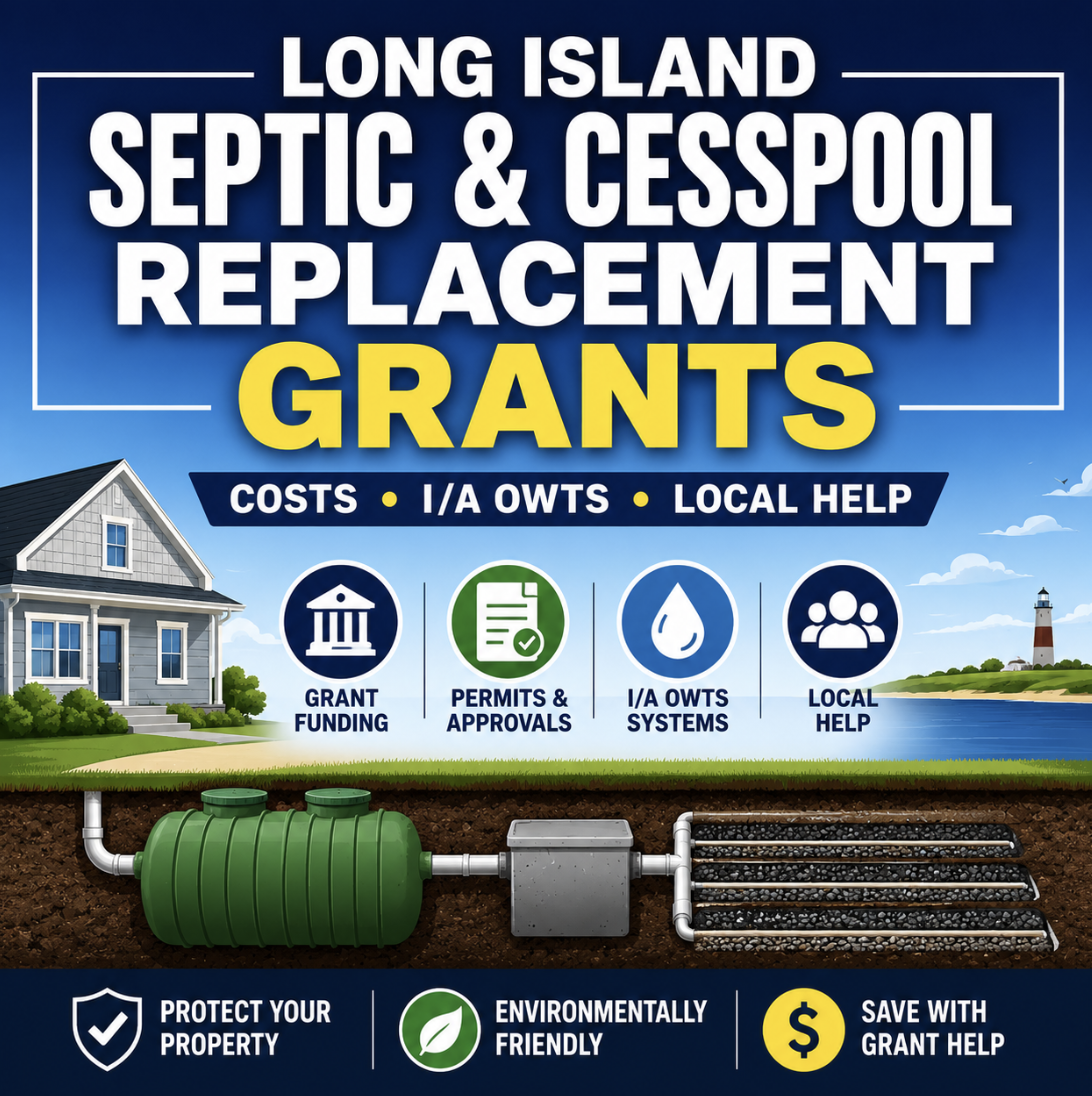
Long Island Septic and Cesspool Replacement: Grants, Costs, I/A OWTS, and Local Help
If you own a home on Long Island with a cesspool or septic system, a replacement quote can get confusing fast. You may hear about Nassau grants, Suffolk grants, New York State grants, I/A OWTS systems, approved installers, design costs, electrical work, maintenance contracts, and out-of-pocket costs that still remain after grant money.
The hard part is that this is not just a septic job. It is a local rules, grant paperwork, county approval, installer selection, and long-term maintenance decision.
Mad Labs Local Repair Help is not a septic installer, engineer, county agency, or grant administrator. We help homeowners understand the documents, quotes, grant language, and next local repair path before they commit to a large septic or cesspool replacement.
Start here: Nassau or Suffolk?
Long Island septic grant questions usually start with the county. Nassau and Suffolk both deal with cesspools, septic systems, nitrogen pollution, and I/A OWTS upgrades, but the application path, approved installers, eligible costs, and homeowner responsibilities can be different.
Grant warning: Do not sign a contract assuming you are guaranteed funding. Eligibility, award amount, approved costs, installer requirements, and county approval must be confirmed through the official program.
What the grants may cover
The basic idea is simple: grant programs are meant to help homeowners replace older cesspools or conventional septic systems with cleaner nitrogen-reducing wastewater treatment systems. The details are where people get stuck.
| Program | What it may help with | Important catch |
|---|---|---|
| Nassau County SEPTIC | Grant funding for eligible recipients replacing a conventional or failing septic system with an innovative and alternative onsite wastewater treatment system. | Nassau lists grants up to $20,000, but the property and project must meet program requirements. |
| Suffolk County SIP | Installation grants for eligible properties replacing cesspools or septic systems with I/A systems. | Suffolk says the County SIP is not a reimbursement program and funds are paid directly to an approved installer after installation. |
| New York State SSRP | State septic replacement funding administered through participating counties. | Counties determine eligibility and awards. The program focuses on properties affecting designated waterbodies and priority areas. |
The cleanest way to think about it is this: grant money may reduce the project cost, but it does not automatically make the project free. Some costs may not be eligible, and some costs may still be the homeowner’s responsibility.
Who may be eligible?
Eligibility depends on the county, property location, current system, property records, proposed system, and whether the project is approved through the proper program path.
| Question | Why it matters |
|---|---|
| Is the property in Nassau or Suffolk? | The local program contact, grant rules, approved installers, and paperwork may differ by county. |
| Is the home served by a cesspool or septic system? | These programs are generally aimed at replacing existing onsite systems, not homes already connected to sewer. |
| Is the property connected to sewer or in a sewer district? | A property connected to public or private sewer may not qualify. Some edge cases require county review. |
| Is there a valid certificate of occupancy or existing use? | County programs may require valid property/use documentation. |
| Are taxes, liens, deed records, or foreclosure issues clear? | Open liens, foreclosure, missing deed records, or property-tax issues can affect eligibility. |
| Is the proposed system approved? | The system technology, design, installer, and county approval path all matter. |
Local Repair Help tip: Before comparing quotes, first confirm whether the quote assumes grant eligibility. A quote that says “after grant” can be misleading if you have not been approved yet.
What is an I/A OWTS?
I/A OWTS stands for Innovative/Alternative Onsite Wastewater Treatment System. In plain English, it is an advanced septic-style system designed to reduce nitrogen before wastewater is discharged below ground.
It is not the same thing as simply replacing an old cesspool with a basic tank. These systems can include treatment tanks, controls, alarms, air or vent components, and technology-specific maintenance requirements.
What homeowners may notice
- Tank covers in the yard
- A control panel
- Alarm or service indicators
- Air intake or vent components
- Routine maintenance visits
- Electrical use for system operation
What the system is trying to do
- Treat wastewater more thoroughly than a conventional system
- Reduce nitrogen entering groundwater
- Protect drinking water, bays, rivers, and estuaries
- Meet local program requirements for grant-funded upgrades
Do not choose based on brand name alone. The right system depends on county acceptance, property conditions, groundwater, soil, number of bedrooms, site layout, installer experience, maintenance needs, and total project cost.
Nassau vs Suffolk: what changes?
The homeowner question may sound the same in both counties — “Can I get help replacing my cesspool?” — but the program details are not identical.
| Topic | Nassau County | Suffolk County |
|---|---|---|
| Main local program | SEPTIC program | County Septic Improvement Program |
| Grant amount listed | Up to $20,000 for eligible projects | County SIP up to $20,000 depending on qualification, plus possible NYS SSRP funding depending on eligibility |
| System type | Nitrogen-reducing IA OWTS using accepted technologies | I/A OWTS approved through Suffolk County Department of Health Services Office of Wastewater Management |
| Installer path | Must follow Nassau program and accepted technology requirements | County SIP grant-funded systems must use vendors on Suffolk’s approved installer list |
| Payment structure | Confirm current disbursement rules with Nassau | Suffolk says County SIP is not a reimbursement program and funds are paid directly to an approved installer after installation |
| Permits and extra approvals | Town, village, county, and site-specific requirements may apply | County Health approval is required; local building permits and wetlands permits may also be required depending on the property |
This is why a generic “septic replacement estimate” is not enough. A good proposal should make clear which county program it is tied to, whether grant funds are assumed, whether the installer is approved, and what is still the homeowner’s responsibility.
Why your out-of-pocket cost may still be high
Grant funding can help a lot, but homeowners are often surprised by what remains outside the grant or what depends on site conditions.
| Cost driver | Why it matters |
|---|---|
| Soil type and groundwater depth | Site conditions can change the design, installation method, and cost. |
| Number of bedrooms | System sizing can depend on the home’s design flow or bedroom count. |
| Site access | Tight yards, fences, pools, driveways, trees, and structures can make excavation harder. |
| Electrical work | I/A systems may require controls, alarms, and electrical operation. |
| Permits and approvals | Some permit fees may not be eligible grant costs and may remain the homeowner’s responsibility. |
| Landscaping and restoration | Installation can disturb the yard, driveway, irrigation, fencing, and landscaping. |
| Ongoing maintenance | Grant-funded systems may require annual professional maintenance and long-term operation responsibilities. |
Good quote language: “This is the gross project cost, this is the expected grant amount if approved, this is what is not grant-eligible, and this is the estimated homeowner responsibility.”
Septic quote review checklist
A good septic or cesspool replacement quote should not leave you guessing. If a proposal is vague, ask more questions before signing.
You should know the total project cost before grants and the estimated out-of-pocket amount after grant funding, if approved.
Nassau SEPTIC, Suffolk SIP, and NYS SSRP are not the same thing. The proposal should not blur them together.
Suffolk County specifically requires grant-funded installations to use vendors on the approved installer list.
The quote should name the system being installed, not just say “advanced septic.”
Design and paperwork can be a real part of the project. Make sure you know what is included and what is billed separately.
I/A systems may need a control panel, alarm, power, or other electrical components.
Permit fees and approval paths can vary. Some fees may not be grant-eligible.
Ask what the annual maintenance contract costs, what the first few years include, and what happens after that.
Yard restoration, irrigation, fences, driveways, walkways, and landscaping can affect your final cost.
Not sure what the quote really means?
Upload your septic quote, grant paperwork, county, and system proposal. Mad Labs Local Repair Help can help you understand what may be covered, what may be out of pocket, what questions to ask, and what type of local septic professional you may need next.
Start Local Repair HelpMaintenance and ongoing costs
This is one of the biggest differences between a basic “replace the cesspool” mindset and an I/A OWTS upgrade. These systems are designed to treat wastewater more actively, which means they may have visible components, electrical operation, alarms, maintenance contracts, pumping, and long-term repair parts.
| Item | What to ask before signing |
|---|---|
| Maintenance contract | What is included, how often service happens, and what it costs after any grant-funded initial period? |
| Pumping | How often does this system usually need pumping, and who schedules it? |
| Electric costs | Does the system run continuously or on demand, and what is the expected annual electric use? |
| Alarm response | If the control panel alarm goes off, who do you call and how quickly do they respond? |
| Replacement parts | Ask about blower, aerator, float, pump, control panel, and technology-specific repair costs. |
| Property sale | Ask what documentation, maintenance records, and system transfer obligations may matter when selling. |
Do not ignore maintenance. A grant-funded system can still create long-term homeowner responsibilities. Ask what the county requires, what the installer provides, and what you pay after the initial period.
When to get local help before signing
Some projects are straightforward. Others deserve a second look before you sign a major contract.
Get help if the quote is unclear
- Grant assumptions are not explained
- Installer approval is not clear
- System technology is not named
- Out-of-pocket cost is vague
- Design, electrical, permits, or restoration are missing
Get help if the property is complicated
- Waterfront or near sensitive waterbodies
- High groundwater
- Small lot or limited access
- Major renovation or addition
- Town, village, wetlands, or sewer-district confusion
The goal is not to slow the project down. The goal is to avoid signing a contract you do not understand, missing a grant requirement, or finding out late that a cost was not included.
What to upload to Mad Labs Local Repair Help
The better the documents, the better the guidance. You do not need everything, but these are the most useful items.
How Mad Labs Local Repair Help works
Mad Labs does not approve grants, install septic systems, issue permits, design wastewater systems, or replace county program guidance. The point is to help you understand the moving pieces before you make a big decision.
- You upload your quote, county, grant paperwork, and system proposal.
- We help identify what the documents are saying. Grant assumptions, eligible costs, installer requirements, system type, and missing line items.
- We flag questions to ask. Out-of-pocket costs, design fees, permit fees, maintenance, electrical, restoration, and approved installer status.
- We help route the next step. Septic installer, approved I/A OWTS contractor, engineer/designer, maintenance provider, county program contact, or second-opinion quote.
The goal is simple: help you avoid confusion, compare quotes more fairly, and move forward with the right local repair path.
Official resources worth checking
Program rules, award amounts, eligible costs, and approved systems can change. Use official county and state pages for current requirements before signing anything.
Long Island septic grant resources
FAQ
Does Long Island have grants for septic or cesspool replacement?
Yes. Nassau County and Suffolk County both have septic replacement grant programs, and New York State also has the Septic System Replacement Fund administered through participating counties. Eligibility and award amounts depend on the county, property, current system, proposed project, and program rules.
How much is the Nassau County SEPTIC grant?
Nassau County lists grants up to $20,000 for eligible homeowners, small businesses, and not-for-profits replacing conventional or failing septic systems with nitrogen-reducing IA OWTS systems. You still need to confirm eligibility through the official program.
How much is the Suffolk County septic grant?
Suffolk County lists the County Septic Improvement Grant Program as providing installation grants up to $20,000 per property depending on qualification. Suffolk also lists the NYS Septic System Replacement Program as up to 75% of eligible costs, not to exceed $25,000 per property, depending on qualification.
What is an I/A OWTS?
I/A OWTS stands for Innovative/Alternative Onsite Wastewater Treatment System. These are advanced wastewater treatment systems designed to reduce nitrogen compared with traditional septic systems or cesspools.
Does the grant make septic replacement free?
Not always. Grant funding may reduce the cost, but homeowners may still be responsible for costs such as permit fees, engineering or design work, electrical work, site restoration, maintenance, and costs that are not eligible under the program.
Do I have to use an approved installer?
In Suffolk County, grant-funded systems must be installed by a vendor on the County Approved Installer List. Nassau also has accepted technologies and program requirements. Always confirm approved installer and technology requirements before signing.
Can I get reimbursed after installing a septic system?
It depends on the program. Suffolk says its County SIP grant is not a reimbursement program and grant funds are paid directly to an approved installer after installation. The NYS SSRP can involve reimbursement or payment to an approved installer depending on the county process. Confirm this before work begins.
What costs are not eligible under the NYS Septic System Replacement Fund?
New York State lists several ineligible costs, including routine pump-outs, government permit fees, undocumented expenses, fines and penalties, sales tax, non-essential beautification, certain administrative engineering work, and connection to public or community sewer.
What ongoing costs come with an I/A OWTS?
Ongoing costs can include annual maintenance contracts, pumping, electricity, and repair or replacement of parts such as blowers, aerators, floats, pumps, or control panels. Ask the installer for system-specific maintenance and cost expectations.
What should I upload for Mad Labs Local Repair Help?
Upload your county and ZIP code, current system type, installer quote, grant paperwork, system proposal, design notes, photos of the property, inspection or failure report, and any maintenance or warranty information.
Can Mad Labs tell me if I qualify for a septic grant?
Mad Labs can help you understand the paperwork, quote language, and questions to ask, but official eligibility and award decisions come from the county or program administrator.


%20(7).png)