
Last updated: June 1, 2026
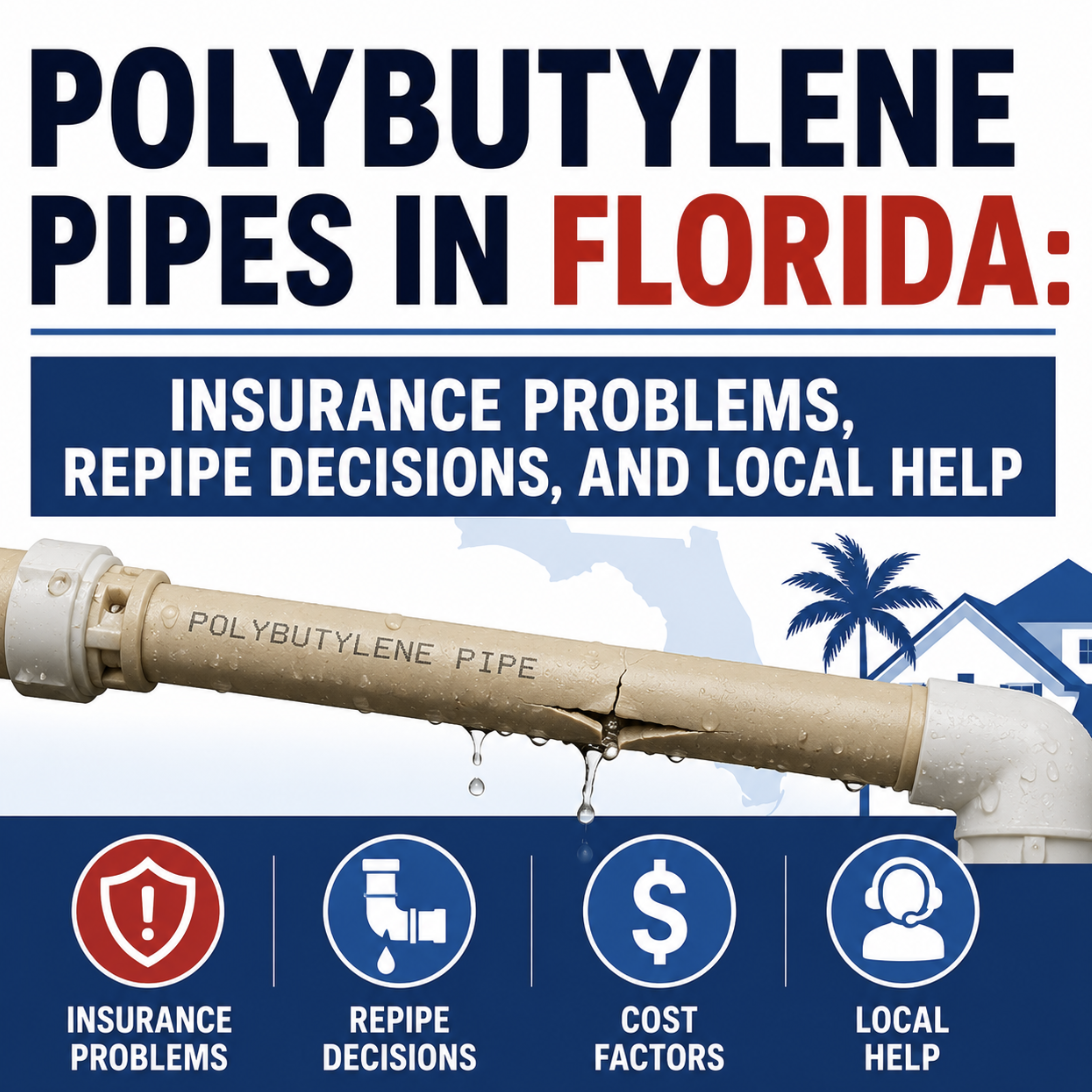
Polybutylene Pipes in Florida: Insurance Problems, Repipe Decisions, and Local Help
Polybutylene pipes are frustrating because they can become a problem before they leak.
Your water may work fine. The house may look clean. The seller may say there has never been a plumbing issue. Then the 4-point inspection, insurance company, buyer, lender, or real estate deadline hits one word: polybutylene.
Now the question changes from “are the pipes leaking today?” to “Can I get insurance, can I close, do I need to repipe, and what proof do I need after the work is done?”
This guide is built for Florida homeowners, buyers, sellers, and agents who need a practical way to sort the decision without getting scared into the wrong move.
The strange thing about polybutylene: the problem is often paperwork before water
With many plumbing problems, you know you have an issue because water is dripping, a ceiling is stained, or a wall is wet. Polybutylene is different. In Florida, it often shows up as an insurance or closing problem first.
A 4-point inspection may list the pipe type. An insurer may ask whether the home has been re-piped. A buyer may ask for a credit. A lender may need bindable insurance before closing. And suddenly, a pipe you barely noticed becomes the thing holding up the whole deal.
Important: Do not assume every insurance company has the same rule. Also do not assume a repipe automatically guarantees coverage. Ask your agent or carrier what they need before spending major money.
First, confirm the pipe is actually polybutylene
Before you panic, confirm what pipe material you actually have. People sometimes call every gray plastic pipe “poly,” but color alone is not enough.
Polybutylene is water supply piping. It is not sewer pipe, drain pipe, waste pipe, or vent pipe. You are usually looking at the pipes that bring water to fixtures, not the drain lines that carry wastewater away.
Plain English: Before you argue with insurance, negotiate with a seller, or sign a repipe quote, make sure everyone is talking about the same pipe.
Why a Florida 4-point inspection flags plumbing type
A Florida 4-point inspection is not just looking for active leaks. The plumbing section can also document pipe type, water heater age and condition, visible plumbing problems, and whether the home has been updated or re-piped.
That is why polybutylene can become an issue even if water is not currently spraying out of the wall. The report may create an underwriting question for the insurance company.
| What gets noted | Why it matters | What to ask next |
|---|---|---|
| Pipe material | The carrier may treat some pipe materials as higher risk. | Does the report clearly identify PB, or does it need verification? |
| Visible leaks | Active leaks are a repair problem and an insurance concern. | Where is the leak, and has a plumber documented the repair? |
| Prior water damage | Stains or patched areas may raise questions about past plumbing failures. | Is the damage old, repaired, or still active? |
| Repipe status | If the home was re-piped, the carrier may want proof. | Can you show invoice, permit, photos, or contractor documentation? |
| Water heater condition | The water heater is part of the plumbing review too. | Is this separate from the PB issue, or part of the same repair plan? |
Do not guess at the insurance answer. The inspector writes the report. The insurance company decides what it will accept. Your agent should help clarify what proof is needed.
Your situation changes the next step
Polybutylene is not a one-size-fits-all decision. The right move depends on whether you own the home, are buying it, are selling it, have an active leak, or only have an insurance documentation problem.
| Your situation | What is really at stake | Smart first move |
|---|---|---|
| You own the home and insurance flagged PB | Renewal, new coverage, exclusions, or underwriting approval. | Ask your agent exactly what the carrier requires and whether repiping is the only acceptable solution. |
| You are buying a home with PB | Closing, insurability, lender requirements, and repair negotiation. | Confirm whether bindable insurance is possible before the deadline. |
| You are selling a home with PB | Buyer objections, credits, inspection negotiations, and deal delays. | Gather any repipe records, plumbing updates, leak history, and insurance information before listing or negotiating. |
| The home was already re-piped | The report may be outdated, incomplete, or based on one visible section. | Find proof of the repipe and ask whether the 4-point needs to be corrected or updated. |
| There is an active leak | Now it is not only an insurance issue. It is a repair and water-damage issue. | Stop the leak, document damage, call a licensed plumber, and handle water damage if present. |
Do you need a repipe, or better documentation?
This is the question most people are really asking.
Sometimes the answer is simple: if the carrier says it will not accept the home with polybutylene, documentation alone may not solve the problem. You may need a full repipe or a different insurance path.
Other times, the issue is messy. The house may have been partially re-piped. The visible pipe under the sink may not represent the whole house. The seller may claim the pipe was replaced but cannot find paperwork. Or the 4-point may list PB even though only an old abandoned section is visible.
When pipe replacement is likely
- The insurer says PB is not acceptable for the policy.
- The home has widespread PB supply piping.
- There are active leaks or repeated plumbing failures.
- The buyer, lender, or carrier will not move forward without replacement.
- The existing documentation does not prove the risky pipe was removed.
When proof may matter most
- The home was already re-piped but the report is unclear.
- Only a small visible section needs verification.
- The 4-point inspection needs updated photos or notes.
- The carrier needs an invoice, permit, or completion letter.
- The seller has records but they are not organized.
The right question is not “are polybutylene pipes bad?” The better question is: what does the insurer, buyer, lender, or report need to see for this specific home?
What a repipe quote should clearly include
If repiping is the path, the quote needs to be clear. A vague quote can create problems later, especially when insurance documentation or a real estate closing is involved.
Do not compare repipe quotes only by the final number. Compare what is included, what is excluded, what material is being used, how the walls will be opened, who handles permits, and what documentation you receive at the end.
Be careful with fake “average cost” answers. Repipe cost can vary a lot based on home size, number of fixtures, number of stories, wall access, material choice, permits, drywall, paint, and how much restoration is included.
What proof to collect after repiping
A completed repipe is only part of the job. If the whole reason for the work was insurance, a 4-point inspection, or a closing deadline, you need a clean proof packet after the job is finished.
Simple rule: If you cannot prove the repipe happened, the insurance or closing problem may not be fully solved.
Buying or selling a Florida home with polybutylene
Polybutylene can make a real estate deal feel uncomfortable because the pipe may be working today, but insurance and resale concerns can still be real.
If you are the buyer, your biggest question is whether you can get acceptable insurance before closing and whether the price reflects the risk or repipe cost. If you are the seller, your biggest question is whether the issue will keep coming back with every inspection and every buyer.
| Role | What to focus on | What not to ignore |
|---|---|---|
| Buyer | Insurance availability, lender requirements, repipe quote, inspection deadline, seller negotiation. | Do not assume you can easily insure it after closing without checking first. |
| Seller | Documentation, disclosure conversations, repair credit strategy, pre-listing repipe decision. | Do not assume buyers will treat PB as a small maintenance item. |
| Agent | Timeline, insurance bind deadline, repair quote clarity, buyer/seller communication. | Do not let the inspection period expire without knowing whether insurance is possible. |
| Homeowner renewing insurance | Carrier requirements, exclusions, repipe documentation, updated 4-point inspection. | Do not wait until the last minute to ask what proof will be accepted. |
Real estate caution: This guide is not legal advice. If disclosure, contract deadlines, credits, or cancellation rights are involved, talk with your real estate agent or attorney.
Who to call first
The right first call depends on what is actually stopping you. A homeowner with an insurance notice needs a different first call than a buyer with three days left in the inspection period.
| Problem | Usually call first | Why |
|---|---|---|
| You are not sure the pipe is PB | Licensed plumber or qualified inspector | You need pipe material verification before making insurance or repair decisions. |
| Insurance flagged PB | Insurance agent | You need to know what the carrier will accept before paying for work. |
| The 4-point report is unclear | Inspector, agent, or Local Repair Help review | You need to separate a real plumbing problem from missing documentation. |
| You need a repipe quote | Licensed repipe plumber | You need a written scope that includes material, access, restoration, permits, and documentation. |
| You are buying the house | Insurance agent plus real estate agent | You need to know whether insurance can be bound and how the repair affects the deal. |
| There is active leaking or water damage | Plumber first, water damage pro if needed | Stop the leak and document damage before it gets worse. |
Hiring tip: Before signing a repipe contract, verify the contractor’s Florida license and make sure the company is qualified for the work being performed.
What to upload for Mad Labs Local Repair Help
If you are stuck between an insurance problem, a repipe quote, and a deadline, upload the documents. The goal is to help you understand what is actually being asked for and what next step makes sense.
What we help sort: whether the issue looks like pipe verification, missing documentation, repipe quote review, insurance proof, or an urgent repair path.
Need help making sense of a polybutylene pipe problem?
Polybutylene can put homeowners in a weird spot. The pipes may not be leaking today, but insurance, a 4-point inspection, or a closing deadline can still force a decision.
Mad Labs Local Repair Help can help you review the report, organize the right questions, compare repipe quote details, and figure out what proof may be missing before you spend money.
FAQ
What are polybutylene pipes?
Polybutylene, often shortened to PB, is a plastic water supply piping material used in many homes during past decades. It is usually discussed as a supply pipe issue, not a drain or sewer pipe issue.
How do I know if my Florida home has polybutylene pipes?
Look for visible supply piping near the water heater, under sinks, at toilets, in laundry areas, garages, attics, or access panels. PB may be marked “PB2110,” but if insurance or closing depends on the answer, have a licensed plumber or qualified inspector verify the material.
Does every gray pipe mean polybutylene?
No. Pipe color alone is not enough. Some PB is gray, but other pipe materials can also appear gray or light-colored. Look for markings and get verification when the decision matters.
Will Florida homeowners insurance cover a house with polybutylene pipes?
It depends on the carrier, the age and condition of the home, whether there are leaks or water damage, and the insurer’s underwriting rules. Some homeowners run into denied coverage or required repiping, while other situations may depend on documentation and carrier-specific guidelines.
Can a 4-point inspection fail because of polybutylene?
A 4-point inspection may flag polybutylene as part of the plumbing review because the report can include pipe type, leaks, updates, and repipe status. Whether that creates an insurance problem depends on the carrier.
Do I have to repipe if I have polybutylene?
Not every situation has the same answer. If your insurer, buyer, or lender will not accept the home with PB, repiping may be required to move forward. If the home was already re-piped or the report is unclear, documentation or verification may be the first step.
Should I buy a Florida home with polybutylene pipes?
Do not decide based on fear alone. First confirm the pipe material, ask whether insurance can be bound, get a clear repipe quote if needed, and decide whether the price, seller negotiation, and deadline make sense.
What should a polybutylene repipe quote include?
A good quote should explain what pipe is being replaced, what material will be installed, whether fixtures and hose bibs are included, whether permits are included if needed, how drywall and paint are handled, what warranty is provided, and what documentation you receive after the work.
What proof does insurance need after a repipe?
Ask your agent or carrier first. Common proof may include a paid invoice, contractor license details, before and after photos, permit and final inspection documents if required, a completion letter, and an updated 4-point inspection.
Can I just accept a water-damage exclusion instead of repiping?
That depends on what the carrier offers and what risk you are comfortable taking. A water-damage exclusion or limitation can be a serious issue, so ask your agent to explain exactly what would and would not be covered before accepting it.


%20(7).png)