Your Headset Cost More Than Your First Car… But Now It Won’t Work. (Here’s What’s Really Going On – and How Mad Lab Repair Can Save It)
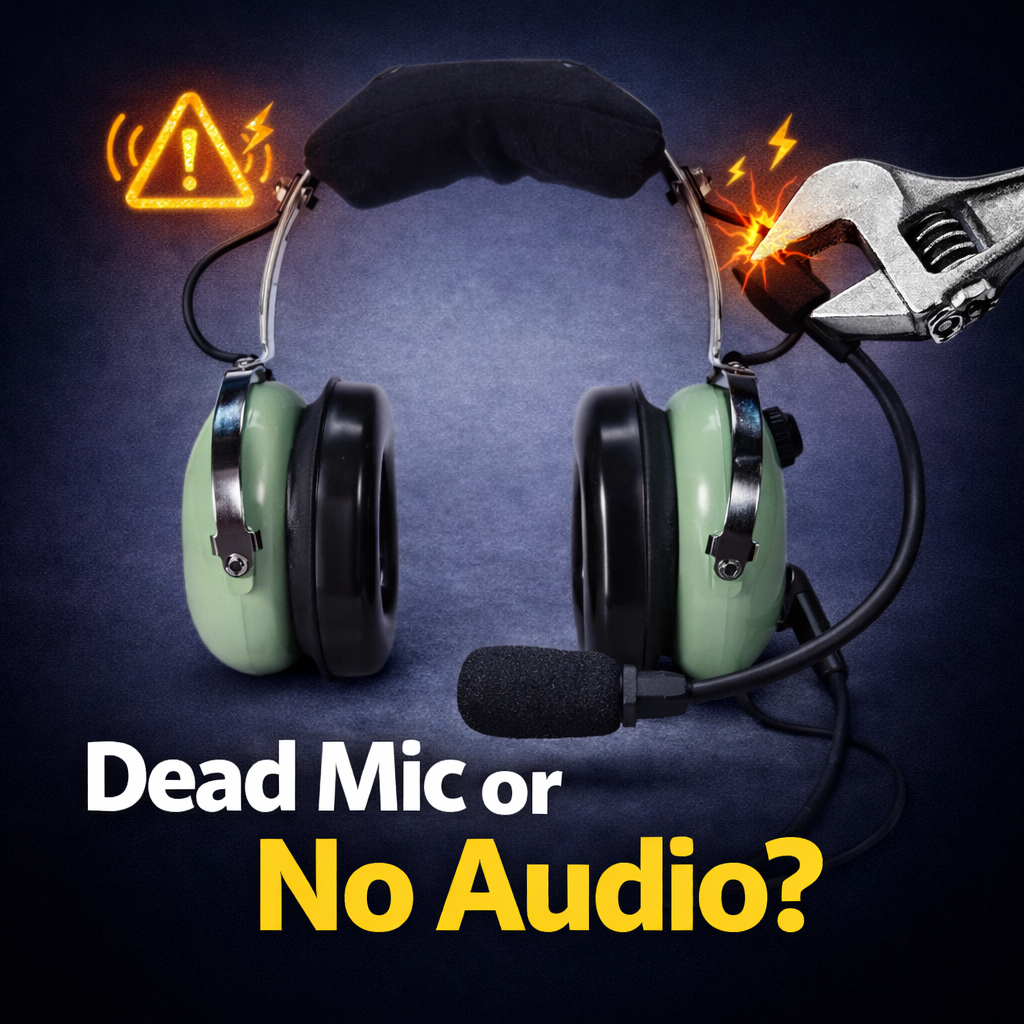
You invested in a premium tactical or aviation headset because your job (or your hearing) depends on it. Whether you are running Peltor ComTacs on the range, a Bose A20 in the cockpit, or a David Clark set on the tarmac, you need flawless active noise cancellation and crystal-clear comms. But right now:
- The microphone is completely dead (or only works if you bend the boom wire at a weird angle).
- Audio is only coming through one ear.
- It refuses to power on, even with fresh batteries.
- You're getting an unbearable high-pitched squeal or constant static.
On paper, this is military-grade or aviation-certified hardware. In practice, it currently feels like a $1,000 pair of heavy earmuffs.
This blog is for that exact symptom: Premium tactical, aviation, and industrial headsets that have lost audio, lost mic function, or refuse to power up. (Mad Lab Repair is not affiliated with 3M Peltor, Bose, or David Clark. We just see a huge pile of these broken headsets that the manufacturers either won't fix anymore, or want to charge you a fortune to look at.)
Quick Fix? Probably Not. Quick CTA? Yes.
If your comms are dropping out or the headset is completely dead, there’s a massive chance the problem is a broken internal wire, a corroded battery terminal, or a snapped downlead—not just a setting you can toggle.
👉 Skip the headache: Mad Lab Repair can usually revive these by micro-soldering broken connections, replacing frayed cables, and fixing battery terminals, saving you from buying a brand-new rig.
- Mail‑in, device-sized box
- Free diagnostic
- You either get it fixed, or it comes back unchanged.
Use our Free Repair Quote form and tell us the brand, model, and exact behavior.
FIRST THINGS FIRST: When to Stop Immediately
While a broken headset might not catch fire like a punctured lithium battery, trying to force it to work can permanently destroy the main circuit board.
Stop using it and take the batteries out right now if:
- The cable is severely frayed and exposing bare wire. If those exposed wires touch the wrong metal contact, they can short out the Active Noise Reduction (ANR) circuit board. Once that board fries, the headset is usually unrepairable.
- The battery compartment has heavy, crusty blue/white corrosion. Don't try to scrape it out with a metal screwdriver; you can easily snap the terminal off the motherboard entirely.
- You hear incredibly loud feedback squeals. This means the internal microphones for the ANR system are failing or blocked, which can actually cause hearing damage if it blasts you unexpectedly.
What This Problem Looks Like in Real Life
Here is the cluster of symptoms we see from pilots, shooters, and heavy equipment operators over and over:
- “The mic only works if I push the plug in really hard.”The GA (General Aviation) plug or NATO downlead has physically broken inside the connector from being yanked out of the panel hundreds of times.
- “It just won't turn on. I've tried five brands of batteries.”The internal battery contacts have either corroded from sweat, or the solder joints connecting the battery housing to the main board have snapped from impact.
- “Audio keeps cutting out in the left ear.”The ultra-thin wiring that runs through the headband over to the other ear cup has pinched, stretched, or snapped.
- “Sent it to the manufacturer and they said it's 'too old' to fix.”Brands like 3M Peltor routinely discontinue support for older models (like the ComTac III) and refuse to sell replacement boards, telling you to just go buy the newest $800 version.
What People Think It Is vs. What’s Actually Failing
The usual guessesMost owners assume:
- "It's just a dead battery." (True sometimes, but if fresh AAs don't fix it, the circuit is broken).
- "The radio/intercom panel is broken." (If you plug a buddy's headset into your jack and theirs works fine, your headset is the problem).
What’s really going on insideUnder the hood, these headsets are incredibly complex. They use tiny microphones to listen to the outside world, processors to cancel out engine noise, and heavy-duty cables to send your voice out. They suffer from two major physical failures:
- Sweat and Moisture: You wear these tight against your head for hours. Sweat sneaks past the ear seals and rots the internal copper wiring and battery terminals from the inside out.
- Mechanical Stress: Getting thrown into flight bags, dropped on the tarmac, or catching the cable on a door frame rips the delicate micro-solder joints holding the cables to the audio board.
Why This Happens So Much With Premium Headsets
These headsets are built tough, but the environments they are used in are brutal.
- The Abuse: They get crushed under gear, baked in hot cockpits, and drenched in rain on the shooting range.
- The Cables: Cables are a wear-and-tear item. No matter how thick the rubber insulation is, the microscopic copper threads inside will eventually snap if they are bent back and forth enough times.
- The Manufacturer Squeeze: Out-of-warranty manufacturer repairs can take 2 to 3 months, and they often charge exorbitant flat fees just to look at it. If you need your gear for work next week, you don't have three months to wait.
That’s where Mad Lab Repair comes in.
Can You Fix This at Home?
You can safely try a few basic things before mailing it in:
Check the simple stuff:
- Try brand-name, high-quality Alkaline batteries (avoid cheap dollar-store batteries or weird rechargeable voltages).
- Make sure the battery door is fully tightened down so the contacts actually touch.
- Check your mono/stereo switches. If your aircraft panel is Mono and the headset is set to Stereo, you will lose audio in one ear.
At that point, we do NOT recommend:
- Taking a soldering iron to your $1,000 headset if you've never micro-soldered before. The traces on these boards are incredibly small, and one slip will melt surrounding components.
- Splicing and wrapping the main comms cable in electrical tape. It will ruin the shielding and cause massive radio interference.
What Mad Lab Repair Actually Does With These
When you send a high-end aviation or tactical headset to Mad Lab Repair, we treat it like the professional tool it is.
- Safe Entry & Diagnostic: We carefully open the ear cups and use multimeters to trace the exact point where the signal is dying—whether it's in the plug, the cable, or the board.
- Micro-Soldering & Cable Repair: If the downlead is snapped, we can often cut it back and re-solder the connections cleanly. If the battery terminal is ripped off, we rebuild the trace on the motherboard.
- Component Level Fixes: We repair frayed boom mics and replace damaged internal speakers to restore clear comms without forcing you to buy a whole new headset assembly.
The goal: you get your exact, broken-in headset back, functioning perfectly, for a fraction of the cost of a new rig.
Why You Shouldn’t Just Ignore It
Letting this problem ride has serious downsides:
- Safety Hazard: If you are a pilot, heavy equipment operator, or in law enforcement, losing comms mid-task is incredibly dangerous. You can't afford intermittent static when you need to hear an instruction.
- You’re Throwing Away Good Gear: The plastic shells, gel cups, and headbands are perfectly fine. Trashing an $800 to $1,500 headset because of a single broken wire is a massive waste of your money.
What You Should Do Right Now
Step 1 – Quick self-testsTry fresh batteries, flip your mono/stereo switch, and test it on a different radio/aircraft panel if possible to confirm the headset is the culprit.
Step 2 – Let Mad Lab Repair take it from hereUse our Free Repair Quote form and tell us your exact model (e.g., Bose A20, Peltor ComTac V, David Clark H10) and exactly what it's doing.
- We reply with shipping instructions and a ballpark expectation.
- We diagnose, then you decide if you want to go ahead with the repair.
You already paid for professional-grade gear. You shouldn't have to buy a whole new setup just because a tiny wire finally gave up.
Bottom line:If your tactical or aviation headset has a dead mic, static, or won't power on, it is almost always fixable. Mad Lab Repair exists to catch these “throw it away” devices, open them up safely, and give them a second life—so you can get back to work with clear comms.
Get A Repair Quote!
Broken device? Tell us what’s going on and we’ll diagnose it, estimate the repair, and walk you through the next steps.

%20(7).png)