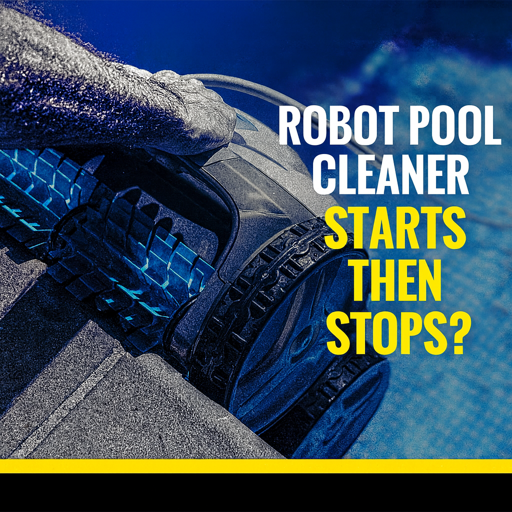
Your robot pool cleaner starts like a champ, runs for 30–60 seconds (or a couple minutes)… and then just gives up.
You restart it.
It moves again.
Same thing: stops mid‑cycle, dead in the water.
If that’s your Dolphin, Polaris, Aiper, Beatbot, Hayward, whatever – this blog is for you.
You’re not alone: owners of Dolphin Nautilus, S‑series and other Maytronics units report “runs for 30 seconds to a few minutes then stops” so often that there are entire threads and Q&As about it, including a Dolphin‑specific FAQ called “My Dolphin does not complete a cycle.”
This post will walk you through:
- What that exact symptom usually means
- A few safe checks you can do yourself
- When it’s time to stop DIY and let a pro (or Mad Labs) deal with it
The Symptom: “It runs… then quits”
Let’s get specific. Most people describe something like:
- “It runs for 30–60 seconds then stops.”
- “It runs a few minutes, tries to climb a wall, and then shuts off.”
- “The power supply stays on, but the robot stops.” or
- “The power supply also turns off after a bit.”
Those little details actually matter, because they point to where the problem is:
- If the power supply itself shuts off → more likely PSU / cable / electrical fault.
- If the power supply stays on but the robot stops → more likely robot side (blocked parts, motors, internal electronics).
Either way: a cleaner that never completes a full 2–3 hour cycle is telling you something is wrong.
Big Picture: What This Usually Means
Modern robotic pool cleaners are basically:
- A low‑voltage power supply
- One or more electric motors (pump + drive)
- A control board / sensors to protect themselves
- Filters, tracks/brushes and a long floating cable
When the robot starts normally and then stops after a short time, it’s usually one of five things:
- The robot thinks it’s “overloaded” (clogged filters or blocked impeller)
- A mechanical part is binding (bearings, tracks, brushes, foreign object)
- The power supply or cable is cutting out under load
- A motor is overheating or failing
- The control board is faulting and shutting the cycle down
The annoying part: the symptom looks the same to you – “it just stops” – even though the root causes are totally different.
Before You Touch Anything: Quick Safety Note
- Always unplug the power supply from the wall before handling the robot or opening any access panels.
- Don’t open sealed motor housings or the power supply box – that’s where you can void warranties or get into unsafe territory.
- If anything looks burned, melted, or chewed (cable damage), stop and treat it as an electrical issue.
1. Clogged Filters or a Starving Pump
This is the least scary cause and the first thing to rule out.
Many robots will shut down early if:
- The filter basket/bag is packed with leaves and debris
- The fine filters are caked in fine dust or algae
- The pump can’t move enough water and the motor is working too hard
Pool pros and manufacturers specifically call out dirty filters and reduced suction as a cause of robots not moving properly or not climbing walls.
Quick check (safe DIY)
- Unplug the power supply.
- Pull the robot out and open the filter compartment.
- Completely empty and rinse the baskets/bags with a garden hose (not a pressure washer).
- Check for plastic bags, twigs, pine needles, acorns or anything that could choke the intake.
- Reassemble, drop it back in, plug in, and try another cycle.
If it suddenly runs a normal‑length cycle after you clean the filters properly, you probably got lucky – your robot was just suffocating.
If it still stops after a few minutes even with clean filters? Move on.
2. Something is Jamming the Brushes, Tracks, or Impeller
This is incredibly common.
Real‑world examples from owners:
- A small toy “diving gem” wedged in the brush area causing a Dolphin‑style cleaner to start and then stop.
- Units that run until they try to climb a wall, then instantly shut down once the load spikes.
Robots have current sensing and protections; if the motor senses a stall (like something stuck in the tracks or impeller), the controller may kill the cycle.
Quick check (safe DIY)
Again, unplug the power supply first.
- Flip the robot over and spin the tracks/brushes by hand. They should move smoothly.
- Look for:
- Toys, stones, coins
- Twigs wedged between track and body
- Hair or string wrapped around axles
- Open the impeller access (usually under a small cover) and check for:
- Twine, leaves, hair, or zip‑tie tails wrapped around the impeller blades
If you clear an obvious blockage and the robot suddenly runs normally, you’ve found the problem.
If it still dies after 1–3 minutes, think electrical or motor.
3. Power Supply or Cable Cutting Out
Next question: when the robot stops, what do the lights on the power supply do?
- If the power supply shuts off or its lights flash and then go dark, the problem may be:
- A failing power supply unit
- A damaged floating cable shorting under load
- A tripping GFCI outlet or bad extension cord
Manufacturer troubleshooting guides for Dolphin and similar robots make a big distinction between “robot stops but PSU stays on” vs “PSU turns off as soon as the robot stops”, and point to PSU or cable faults in that second case.
There are also reports of water getting into the swivel cable connection on some Dolphin models, causing shorts that make the robot shut down shortly after starting.
Quick checks (safe DIY)
- Try a different outlet (ideally another GFCI circuit) without extension cords.
- Inspect the entire cable end‑to‑end:
- Nicks, cuts, chew marks
- Crushed sections
- Burned or discolored spots
- If you see any exposed copper or obvious crush damage, stop using the cleaner until the cable or PSU is replaced.
If the PSU stays solidly on, the cable looks healthy, and the robot still stops after a few minutes, odds are the problem is in the robot itself.
4. Motor Overheating or Internal Wear
Under the hood, most robots use:
- A pump motor (suction)
- One or more drive motors (tracks/brushes)
Owners dealing with “runs for 30–60 seconds then stops” often describe:
- The robot starting normally,
- Slowing to a crawl,
- Then stopping completely, repeating the pattern every restart.
On some units, people have temporarily revived them by cleaning and lubricating worn bearings, but also complain that replacement parts are hard to source – which is code for “this is a real wear‑and‑tear failure,” not just a clogged basket.
If a motor is drawing too much current or heating up very quickly, the control board may shut it off to protect itself, giving you that short‑run symptom.
How you know it might be a motor issue
- Filters are spotless, tracks are clear, cable and PSU look fine
- The robot always quits about the same time, regardless of pool debris
- The power supply stays on, but the robot is lifeless until it “rests” for a bit
At this point, you’re into internal repair territory: motor assemblies, seals, bearings, O‑rings.
That’s where a pro (or one of Mad Labs’ partner shops) has to take over.
5. Control Board / Sensor Fault
Finally, there’s the brain.
Every robot has a small controller that:
- Times the cycle
- Watches motor current
- Sometimes reads tilt / orientation sensors
- Decides when to stop
When those boards start to fail, you can see weirdly consistent, short stops:
- Runs a minute or two
- Maybe stops in a specific situation (first wall climb, first direction change)
- Needs a full power reset to try again, then repeats exactly
These failures are brand‑specific and not something you can diagnose with a garden hose and a screwdriver.
In many cases, the “fix” is replacing the entire motor+controller pod as one sealed unit. That’s not cheap – but for high‑end robots that cost $700–$3,000, owners often prefer repair over replacement.
When to DIY vs When to Stop
Here’s how we’d split it:
Reasonable DIY (low risk)
- Cleaning and re‑seating filters/baskets
- Checking and clearing debris around tracks, brushes, and impeller
- Trying a different outlet and checking for tripping GFCI
- Visual inspection of the cable for obvious damage
If one of those steps fixes it and the robot completes a normal cycle – nice. You’re done.
Time to stop DIY
Stop and call in help if:
- The robot still stops after a few minutes even with clean filters and no visible blockages
- The power supply cuts out or you see error lights every time it stops
- You see cable damage, melted spots, or smell anything burned
- The unit is out of warranty and you’re debating repair vs replacement
Opening sealed motor housings, trying to re‑solder boards, or bypassing safety devices is how people turn a $1,000 robot into a static pool ornament.
What Mad Labs Can Actually Do For You
Right now, Mad Labs Repair is built for high‑ticket, mail‑in, “no one else wants to touch this” problems.
For robot pool cleaners, here’s how we slot in:
- We translate your symptom into likely causes and costs.
- Brand + model (Dolphin, Polaris, Aiper, Beatbot, etc.)
- Exact symptom (“runs 2 minutes then stops, PSU light stays on”)
- Age of the unit, in or out of warranty
- We tell you honestly if it’s worth repairing.
- On a $250 bargain robot, a dead motor pod usually means “don’t throw good money after bad.”
- On a $800–$2,000 robot, a professional rebuild or pod replacement can absolutely make sense.
- We either:
- Route you to a trusted repair partner who actually lives and breathes these robots, or
- Let you know when “replace it” is sadly the smarter move.
You’re not signing up for a mystery bill – you’re getting clarity:
“Here’s what that ‘runs for a few minutes then stops’ symptom usually means for your robot, and here’s the smartest next step.”
What To Do Next (Simple)
If your robot:
- Starts normally
- Runs for 30–60 seconds or a couple minutes
- Then stops every single time
Do this:
- Give it one deep clean (filters, baskets, impeller, tracks).
- Try it again.
- If it still stops early, don’t keep cycling it 15 times in a row – that can make a marginal motor or board worse.
- Grab the model number, describe exactly what it does, and reach out.
Mad Labs Repair – “Mail‑in repair, simplified.”
Tell us your brand + “runs a few minutes then stops” story, and we’ll tell you if it’s a simple fix, a real repair job, or time to retire your robot.

%20(7).png)