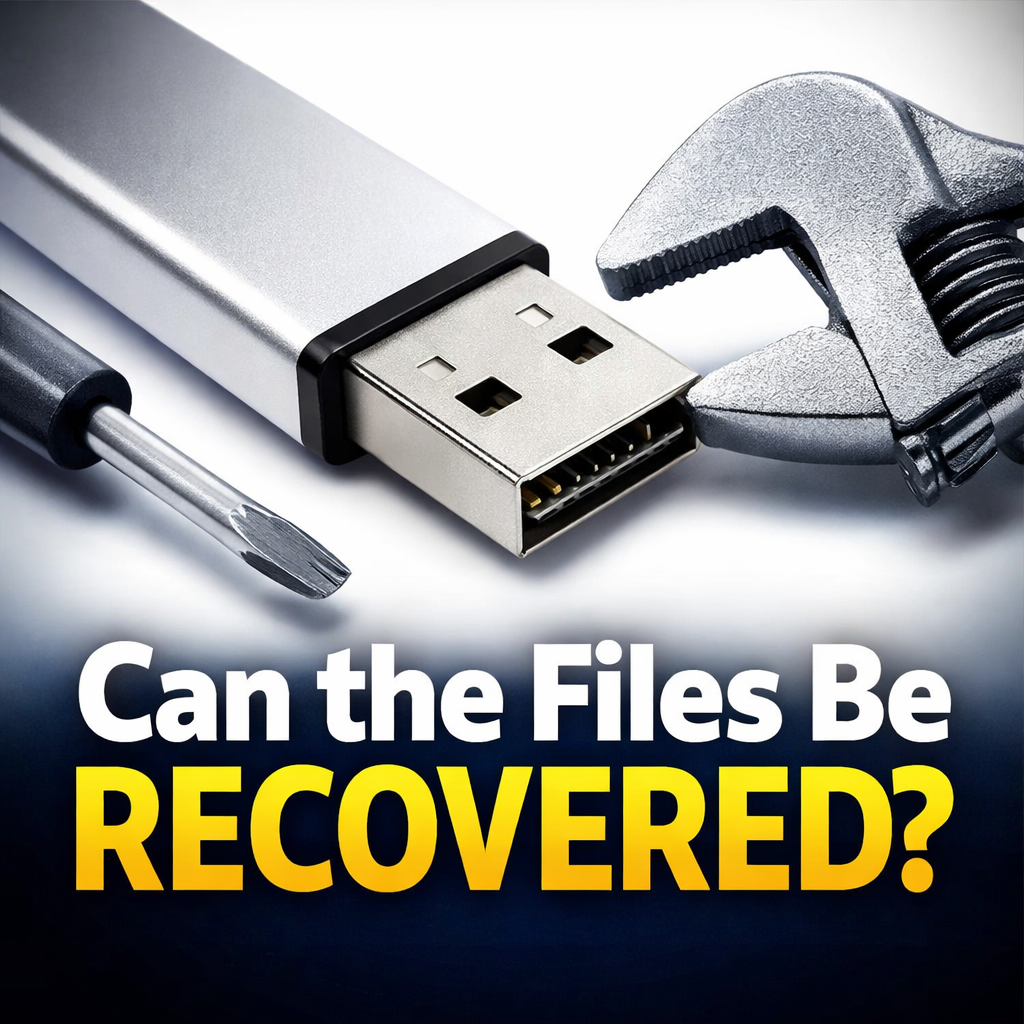
Yeah — a lot of the time, the files can be recovered, even if your USB stick won’t show up in File Explorer/Finder or Windows says “USB device not recognized.”
The big “make-or-break” factor is what you do next.
✅ Start a Repair (recommended if the files matter)
If you want the best shot at recovery, avoid these common moves:
If you already clicked something by accident, don’t panic — just stop now and start a repair.
When a USB flash drive isn’t recognized, it’s usually one of these:
Windows can throw a “USB device not recognized” error even if the drive is okay (port, driver, hub, power, etc.).
You might see it in Disk Management / Disk Utility, but it won’t mount or open.
This is a big red flag. SanDisk notes that when a removable drive shows No Media, the data may still exist, but the flash inside the drive may have failed (DIY usually doesn’t fix that).
These checks don’t write to the drive.
If it works on another computer: good sign.
That message often shows up when Windows can’t understand the drive’s structure (file system/partition info).
If you format, you’re choosing “use the drive again” over “get the files back.”
If the files matter: don’t format → Start a Repair.
Stop messing with it and start a repair if:
✅ Start a Repair
Can you recover files if the USB doesn’t show up at all?
Sometimes yes — but it depends whether the computer can see the device at any level (even if it can’t open the files).
Should I run First Aid on Mac Disk Utility?
First Aid is a repair tool (Apple’s own steps describe it as checking/repairing). If your priority is data recovery, it’s safer to pause and start a repair.
What does “No Media” mean?
Often: the computer sees the USB interface, but not the storage behind it. SanDisk notes this can happen when the flash inside has failed.
If your USB flash drive isn’t recognized and the files matter, don’t gamble with formatting or repair tools.
✅ Start a Repair
%20(7).png)
Fix what’s worth keeping.
Copyright © 2025 Mad Labs Repair. All Rights Reserved