%20(6).png)
Last updated: June 1, 2026
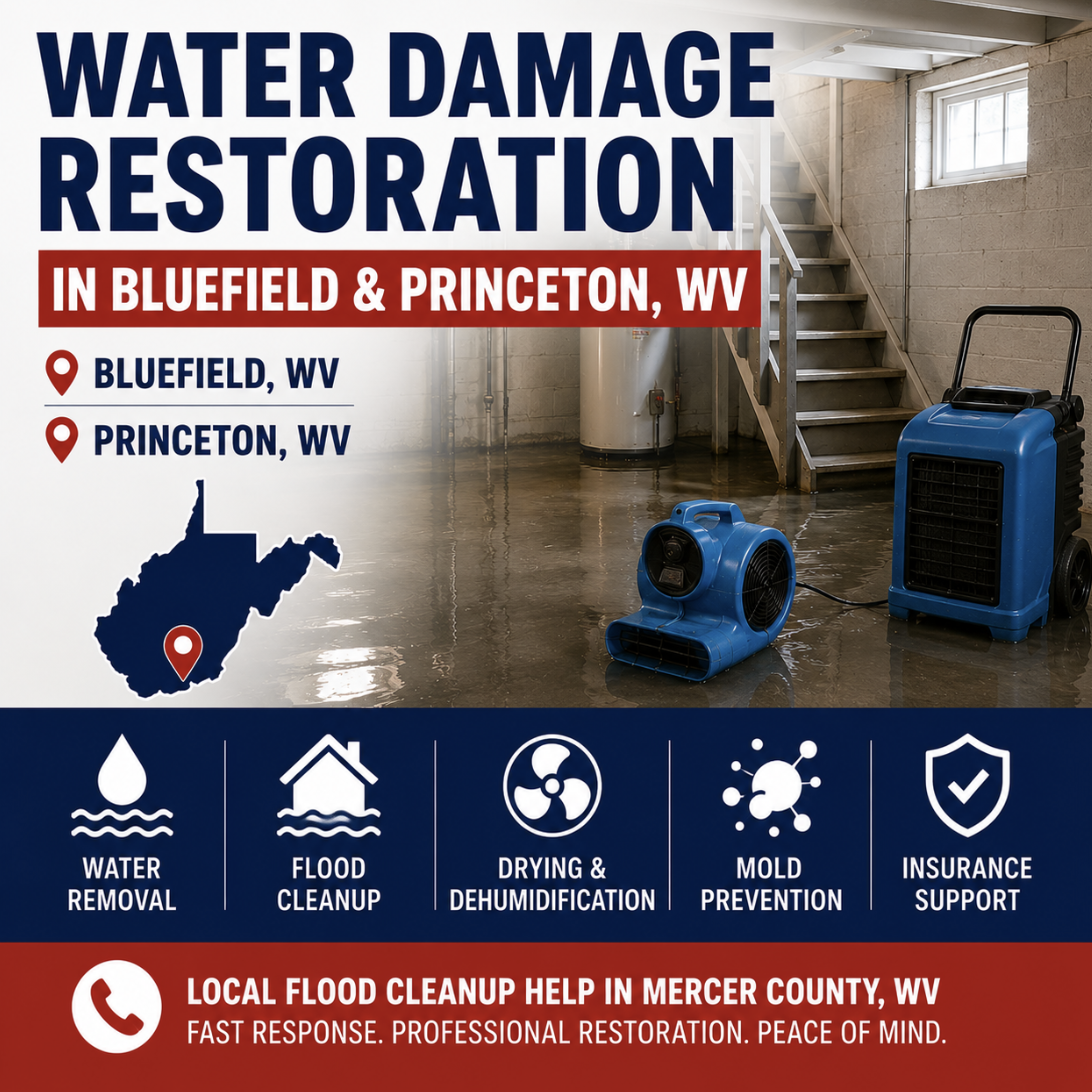
Water Damage Restoration in Mercer County, WV: Bluefield, Princeton, Flood Cleanup, Basement Water, and Sewage Backup Help
When water gets into a home or business, the first few decisions matter.
If you are in Bluefield, Princeton, Athens, Bramwell, Brush Fork, Bluewell, or another Mercer County community, the problem might be a burst pipe, a water heater leak, a flooded basement, a sewage backup, a roof leak, crawlspace water, or outside floodwater after heavy rain.
The right next step depends on where the water came from, whether it is contaminated, how long it has been sitting, what it touched, and whether you need emergency water removal, a plumber, sewage cleanup, mold help, flood documentation, or a restoration company.
Mad Labs Local Repair Help is not a restoration contractor. We help you understand the situation, organize the right information, and figure out what kind of local help makes sense before you commit to a cleanup estimate.
Water is in the house right now? Start here.
Before you start pulling up flooring or running fans, slow down for safety and documentation. Water damage can become more expensive when the source is not stopped, contaminated water is spread around, or damage is cleaned up before it is photographed.
Emergency note: If there is fast-moving water, structural damage, shock risk, trapped people, or any immediate danger, call emergency services first. Property cleanup comes after people are safe.
Why Mercer County water damage is not a generic service search
Water damage around Bluefield and Princeton is not always the same as a small leak in a flat suburban house. Mercer County can deal with localized heavy downpours, creek and river high water, saturated ground, hillside runoff, basements, crawlspaces, older homes, and rural access issues.
Sometimes the water comes from inside the building, like a broken pipe or water heater. Sometimes it comes from outside, like a heavy rain event, flooded low area, creek overflow, or water pushing into a basement. That difference matters for cleanup, safety, and insurance.
Flash flooding and basement water
Heavy rain can create fast water problems in low spots, older neighborhoods, basements, garages, utility rooms, and commercial spaces. Standing water needs quick attention, but it also needs the right safety call.
Stormwater, crawlspaces, and disaster recovery
Stormwater, saturated ground, and crawlspace moisture can create hidden damage. Some events may also involve insurance, flood insurance, or disaster-assistance documentation.
Plain English: The search is local, but the real decision is practical: what kind of water is it, what did it touch, and who should handle it safely?
What kind of water damage do you have?
This is the most important question. A fresh pipe leak is not the same as a sewage backup. A roof leak is not the same as muddy floodwater. The water source changes the cleanup, the safety risk, and the insurance path.
| Water situation | What it may mean | Best first move |
|---|---|---|
| Fresh supply-line leak | Often cleaner water if caught quickly, but moisture can still hide behind materials. | Stop the leak, call a plumber if needed, and dry affected materials properly. |
| Water heater or appliance leak | Water may spread under flooring, cabinets, trim, or basement finishes. | Stop the appliance/source and consider restoration help if materials are wet. |
| Basement water after rain | Could be stormwater, seepage, sump failure, drainage, or foundation-related water entry. | Remove water, document the event, then look at drainage or waterproofing causes. |
| Sewage backup | Higher contamination risk. Carpet, drywall, and porous materials may not be safe to keep. | Stay out of it and call sewage cleanup plus a plumber or sewer/septic professional. |
| Outside floodwater | Can carry bacteria, chemicals, mud, debris, and other hazards. | Treat as flood cleanup and document everything before disposal if safe. |
| Water sat overnight or longer | Hidden moisture and mold risk become bigger concerns. | Ask about moisture readings, removal decisions, and drying documentation. |
Do not treat every water job the same. Fans may help with a small clean-water leak, but they can be the wrong move around sewage, dirty floodwater, hidden moisture, or moldy materials.
Should you call a plumber or a restoration company first?
A lot of homeowners get stuck here. The answer depends on whether the water is still coming in and what kind of damage already happened.
| Problem | Call first | Why |
|---|---|---|
| Pipe is still leaking | Plumber, then restoration if materials are wet | The source has to stop before drying can really work. |
| Standing water in basement | Water restoration company | Water extraction, drying, and moisture checks may be needed quickly. |
| Sewage backup | Sewage cleanup/restoration plus plumber | The cleanup is contaminated, and the backup source has to be fixed. |
| Roof leak | Roofer plus restoration company | The roof leak and the interior water damage are two different jobs. |
| Water after heavy rain keeps coming back | Restoration, then drainage or waterproofing help | Dry the damage first, then solve why water keeps entering. |
| Musty smell after water damage | Restoration or mold professional | There may be hidden moisture or mold behind surfaces. |
| Water near electrical systems | Emergency help and qualified electrical evaluation | Shock risk changes what is safe to touch or enter. |
Good rule: If the source is still active, stop the source. If materials are wet, dry the structure. If water is contaminated, do not DIY it like a clean spill.
When water damage is not safe to clean yourself
Some water damage is small and manageable. A towel under a small clean leak is one thing. A flooded basement with outlets, sewage, outside water, or wet drywall is different.
When in doubt, avoid contact with the water, protect people first, and get local emergency help before disturbing contaminated materials.
What to document before cleanup
If it is safe, take photos and video before you throw away wet items or remove materials. This matters for insurance, flood insurance, FEMA/disaster paperwork, landlord issues, seller disclosures, buyer negotiations, and contractor estimates.
Simple rule: Document first if it is safe. Clean next. Do not destroy evidence of the water source before you have a basic record.
Homeowners insurance, flood insurance, and FEMA: do not assume the answer
Water damage coverage depends on where the water came from. A sudden pipe leak inside the house is usually a different insurance question than outside floodwater from a creek or heavy rain event.
Standard homeowners insurance usually does not cover outside flood damage. Flood insurance is usually a separate policy. Disaster assistance may be available only after certain declared disasters and eligibility steps. Sewage backup may depend on whether your policy has the right endorsement.
| Cause | Possible path | What to ask |
|---|---|---|
| Burst pipe | Homeowners insurance may apply depending on the policy and facts. | What documentation do you need before cleanup or repair? |
| Water heater leak | May involve homeowners insurance, plumber, and restoration. | Do you need photos of the heater, damaged materials, and repair invoice? |
| Roof leak | May depend on storm damage, roof condition, and policy terms. | Should a roofer inspect before interior repairs are completed? |
| Outside floodwater | Usually a flood insurance or disaster-assistance question. | Do you have a flood policy, and are there current disaster resources? |
| Sewage backup | May depend on sewer/septic backup coverage or endorsement. | Is sewage backup included, excluded, or limited? |
| Long-term seepage | Often treated differently than sudden accidental damage. | What does your policy say about seepage, maintenance, and repeated water entry? |
Coverage warning: Mad Labs does not decide insurance coverage, FEMA eligibility, or claim value. We can help you organize photos, source details, estimates, receipts, and questions before you talk to your insurer or a restoration company.
What water damage restoration may cost
Be careful with exact local price promises. A small clean-water leak in a utility room is not the same as a sewage backup in a finished basement or floodwater in a crawlspace.
National cost guides can be helpful as a starting point, but a Bluefield or Princeton restoration estimate should be based on the actual water source, contamination level, square footage, materials affected, drying time, demolition, contents cleaning, and rebuild scope.
| Cost driver | Why it changes the job |
|---|---|
| Water category | Clean water, gray water, sewage, and outside floodwater require different cleanup paths. |
| Square footage | A small bathroom leak is very different from a full basement or commercial space. |
| Time wet | Water that sat longer can mean more removal, drying, and mold evaluation. |
| Materials affected | Carpet, pad, drywall, insulation, cabinets, subfloor, and crawlspace materials all change the scope. |
| Demolition required | Some materials can be dried; others may need to be removed. |
| Contents cleaning | Furniture, tools, inventory, documents, and personal items can add a separate cleanup path. |
| Mitigation vs reconstruction | Drying the building is not the same as replacing drywall, flooring, paint, cabinets, or trim. |
| Emergency timing | After-hours calls, storm demand, and regional flooding can affect response and pricing. |
Ask for the estimate in pieces: emergency water removal, drying equipment, demolition, cleaning, contents, mold-related work, and reconstruction should be clear enough that you know what you are approving.
How to avoid out-of-market restoration lead pages
This matters in Bluefield and Mercer County. Some search results may look local at first, but the phone number, domain, or wording can point to an out-of-market lead page instead of a real local or regional restoration provider.
A lead broker is not automatically bad, and a franchise is not automatically bad. The problem is when you think you are calling a local emergency crew, but you are actually submitting your information to a generic page that may resell or route the lead without explaining who is coming.
Red flag: Be careful with any page that looks local but will not say who is coming, where they are based, what areas they actually serve, or what company will be responsible for the work.
Questions to ask before hiring a water damage restoration company
In an emergency, you may not have hours to compare companies. But you can still ask a few questions that separate a real restoration plan from a vague sales pitch.
Hiring tip: When the project includes plumbing, electrical, HVAC, or reconstruction, verify the proper licensing or qualified trade involvement before work begins.
What to upload for Mad Labs Local Repair Help
If you are not sure who to call, upload the situation. Mad Labs Local Repair Help can help you sort whether this looks like emergency water extraction, plumber-first, sewage cleanup, flood cleanup, mold risk, drainage/waterproofing, roof leak repair, or restoration quote review.
What we help with: organizing the facts, identifying the likely first call, spotting missing documentation, and preparing better questions before you approve a water damage estimate.
Need help figuring out a water damage situation in Bluefield or Princeton?
Water damage can feel urgent and confusing at the same time. You may need help fast, but you still deserve to understand whether the job is plumbing, extraction, sewage cleanup, flood cleanup, mold prevention, drainage, roofing, or rebuild work.
Send photos, describe the water source, and tell us your town. We’ll help you organize the next step before you call, hire, or approve a cleanup quote.
FAQ
What should I do first after water damage in Bluefield or Princeton?
Make sure people are safe, avoid standing water if electricity or contamination may be involved, stop the water source if you can do so safely, take photos and video, and call the right local help based on where the water came from.
Is basement flood cleanup safe to do myself?
Small clean-water leaks may be manageable if caught quickly. Basement water from outside flooding, sewage, electrical contact, wet drywall, wet insulation, or water that has been sitting should be handled more carefully and often needs professional help.
How fast does mold grow after water damage?
Mold risk increases when materials stay wet. EPA guidance warns that mold can grow on wet materials if they remain wet for more than 24 hours. Fast drying and proper removal decisions reduce the risk.
What is the difference between water damage restoration and flood cleanup?
Water damage restoration usually includes water extraction, drying, dehumidification, moisture checks, cleaning, and sometimes demolition. Flood cleanup usually involves outside water, mud, debris, contamination concerns, and possible flood insurance or disaster documentation.
Who cleans sewage backup in a basement?
Sewage backup cleanup is usually handled by a restoration company that offers sewage or contaminated water cleanup, along with a plumber, sewer contractor, or septic professional to fix the source of the backup.
Should I call a plumber or water damage restoration company first?
If water is still coming from a pipe, toilet, appliance, or drain, a plumber may need to stop the source. If building materials are wet, standing water is present, sewage is involved, or drying is needed, a restoration company may also be needed.
Does homeowners insurance cover water damage?
It depends on the source and the policy. Sudden internal plumbing leaks may be treated differently than outside flooding, sewage backup, or long-term seepage. Ask your insurance carrier or agent before assuming coverage.
Does homeowners insurance cover flooding?
Standard homeowners insurance usually does not cover outside flood damage. Flood insurance is usually a separate policy. Creek, river, flash flood, and outside stormwater claims should be discussed with your flood insurer or insurance agent.
What photos should I take before cleanup?
Take photos and video of the water source, water line, affected rooms, damaged contents, flooring, drywall, basement, crawlspace, roof leak areas, sewage contamination, and any visible mold if it is safe to do so.
How much does water damage restoration cost?
Cost varies by water source, contamination level, square footage, how long materials stayed wet, demolition, drying equipment, contents cleaning, mold concerns, and reconstruction. Ask for a written estimate that separates mitigation from rebuild work.
What should I ask before hiring a restoration company?
Ask whether the company is local or regional, whether it handles emergency water removal, sewage cleanup, moisture documentation, mold remediation, insurance paperwork, and reconstruction. Also ask what is included and excluded in the estimate.
How do I know if a Bluefield water damage company is actually local?
Check the business name, phone number, service area, address or regional presence, certifications, reviews, and whether the company says who will actually perform the work. Be careful with city pages that do not clearly identify the responding company.
Can Mad Labs help me find local water damage help?
Mad Labs Local Repair Help can help you understand the water source, safety concerns, documentation needs, cleanup category, and what type of local professional to contact next. We are not the restoration contractor.


%20(7).png)