%20(6).png)
Last updated: June 1, 2026
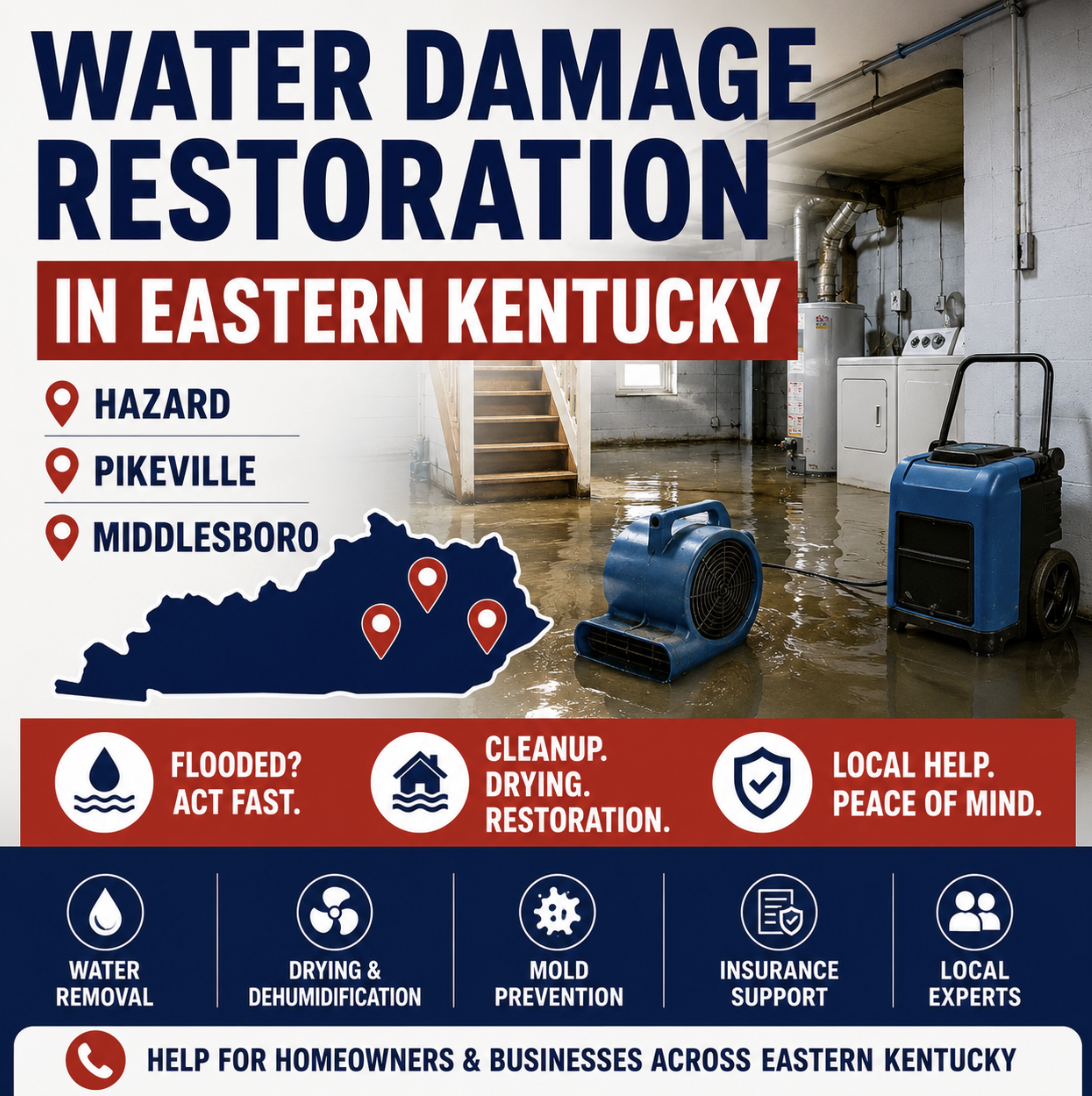
Water Damage Restoration in Eastern Kentucky: Flood Cleanup, Basement Water, Sewage Cleanup, and Local Help
Water damage does not wait for a good time. It can be a flooded basement after heavy rain, a burst pipe, a sewage backup, a wet crawlspace, a roof leak, or muddy floodwater coming in from outside.
If you are in Hazard, Pikeville, Middlesboro, Harlan, Whitesburg, Hindman, Prestonsburg, Inez, Jenkins, or another Eastern Kentucky community, the first decision is not which company has the biggest ad. The first decision is: what kind of water is this, is it safe to be around, what needs to be documented, and who should be called first?
This guide is here to help you slow the situation down, protect your home, and avoid guessing when the water source, contamination level, insurance path, or mold risk is not clear.
Water just got in. Do these things first.
Before you start dragging out fans or ripping up flooring, take a minute to think about safety and documentation. The wrong first move can make the cleanup more dangerous or make an insurance claim harder to explain.
Emergency warning: If there is immediate danger, fast-moving floodwater, electrical risk, structural damage, or anyone trapped, call emergency services first. Cleanup comes after people are safe.
Why water damage is different in Eastern Kentucky
Water damage in Eastern Kentucky is not always a simple “wet carpet” problem. Homes in mountain communities can deal with flash flooding, steep driveways, basements, crawlspaces, hollows, creek flooding, stormwater runoff, septic or sewer backups, and rural response challenges.
Some water problems come from inside the house, like a pipe, water heater, appliance, or toilet overflow. Others come from outside, like heavy rain, creek flooding, muddy runoff, or stormwater pushing into a basement or crawlspace. Those are very different cleanup situations.
Plumbing, appliance, or roof source
Burst pipes, water heaters, washing machines, dishwashers, roof leaks, and fixture overflows may involve a plumber, roofer, or restoration company depending on how far the water spread.
Flood, stormwater, or ground source
Creek flooding, flash flooding, muddy basement water, and wet crawlspaces can be more dangerous because the water may be contaminated and may require a different insurance or disaster-recovery path.
Plain English: The cleanup path depends less on the town name and more on the water source, how long it sat, what it touched, and whether it was contaminated.
What kind of water are you dealing with?
This is the most important question. A fresh supply-line leak is not the same as sewage in a basement. A water heater leak is not the same as muddy floodwater from a creek.
| Situation | Common examples | Best first move |
|---|---|---|
| Clean water, caught fast | Supply line, water heater, fresh appliance leak. | Stop the source, call a plumber if needed, start professional drying if materials are wet. |
| Drain or appliance discharge | Washer overflow, dishwasher leak, some drain backups. | Find the source and consider restoration help if flooring, cabinets, drywall, or subfloor got wet. |
| Sewage backup | Toilet overflow with waste, sewer backup, septic backup. | Stay out of it and call sewage cleanup / restoration plus a plumber or septic professional. |
| Outside floodwater | Flash flood, creek water, muddy basement water, stormwater entering the home. | Treat as contaminated flood cleanup and document everything before removal if safe. |
| Water sat too long | Wet drywall, insulation, carpet, crawlspace, cabinets, or flooring after 24 hours or more. | Get restoration guidance and watch for mold, hidden moisture, and removal needs. |
Do not blow fans across sewage or dirty floodwater. Moving air across contaminated water can spread odors, particles, and moisture into other areas. Get the water source and contamination level sorted first.
When cleanup is not safe to DIY
There are plenty of small leaks a homeowner can handle. A wet towel under a sink is one thing. Floodwater in a basement or sewage in a finished room is another.
Call professional help when the water is contaminated, hidden, widespread, or near systems that can create safety risks.
Flood cleanup vs water restoration vs mold remediation
These terms get used together, but they do not always mean the same job. Knowing the difference helps you call the right company and ask better questions.
| Service | What it usually means | When it matters |
|---|---|---|
| Water damage restoration | Water extraction, drying, dehumidification, moisture checks, sanitation, and sometimes demolition. | Useful for burst pipes, water heater leaks, appliance leaks, and wet building materials. |
| Flood cleanup | Cleanup after outside water enters the home, often with mud, debris, and contamination concerns. | Important after creek flooding, flash flooding, or stormwater intrusion. |
| Sewage cleanup | Removal and cleaning after toilet, sewer, or septic backup contamination. | Needed when wastewater or sewage touched flooring, drywall, belongings, or crawlspace areas. |
| Mold remediation | Containment, removal, cleaning, and correction after mold growth is present or suspected. | May be needed if moisture sat too long or mold is visible/smelled behind materials. |
| Reconstruction | Putting the building back together after mitigation: drywall, paint, flooring, cabinets, trim, and repairs. | Needed after damaged materials are removed and the structure is dry. |
Some companies handle mitigation and reconstruction. Others only dry and remove damaged materials, then you hire someone else to rebuild. Ask before you sign.
Who should you call first?
The right first call depends on whether the water is still coming in, where it came from, and what it touched.
| Problem | Usually call first | Why |
|---|---|---|
| Active standing water | Emergency water restoration company | Water removal and drying need to start quickly once it is safe. |
| Burst pipe or supply leak | Plumber plus restoration company | The plumber stops the source; restoration handles drying and damage control. |
| Sewage backup | Sewage cleanup/restoration company plus plumber or septic pro | The cleanup is contaminated, and the source also needs to be fixed. |
| Basement water after rain | Restoration company, then drainage or waterproofing help | Dry the space first, then solve why water keeps entering. |
| Crawlspace water | Crawlspace drying/restoration specialist | Crawlspaces can hide wet insulation, mold, odors, and structural moisture. |
| Roof leak during storm | Roofer plus restoration company | The roof source and the interior water damage both need attention. |
| Visible mold after water damage | Mold remediation or restoration company | Cleaning visible mold without fixing moisture can lead to repeat problems. |
| Flood/disaster paperwork | Insurance/flood insurance/FEMA documentation path | Coverage and assistance depend on the water source, policy, and disaster status. |
What to document before cleanup
If it is safe, document the damage before you remove everything. You are not trying to delay cleanup. You are trying to create a clear record for insurance, flood insurance, FEMA paperwork, contractors, landlords, buyers, sellers, or repair estimates.
Simple rule: Photograph first if safe, then clean. Do not hide damage before it is documented.
What water damage restoration can cost
Water damage pricing is hard to compare because one job may be a small clean-water dry-out, while another may involve sewage, demolition, contents cleaning, crawlspace drying, mold remediation, and reconstruction.
Online averages can be useful as a rough starting point, but they should not be treated as a quote for Hazard, Pikeville, Middlesboro, Harlan, Whitesburg, Hindman, or any other Eastern Kentucky town. A local restoration estimate should be based on the actual water source, square footage, materials affected, contamination level, and how long everything stayed wet.
| Cost driver | Why it changes the job |
|---|---|
| Water type | Clean water is different from sewage or outside floodwater. |
| How long it sat | Wet materials that sit longer can create hidden moisture and mold concerns. |
| Square footage | A small laundry leak is not the same as an entire basement or business. |
| Materials affected | Carpet, pad, drywall, insulation, cabinets, subfloor, and crawlspace materials all change the scope. |
| Demolition needed | Some materials can be dried; others may need removal. |
| Contents cleaning | Furniture, inventory, documents, tools, and personal items may require pack-out or disposal. |
| Rebuild work | Drying is not the same as putting back drywall, paint, flooring, cabinets, or trim. |
| Emergency timing | After-hours, storm surge demand, and regional flooding can affect scheduling and cost. |
Ask what the estimate includes. Water removal, drying, demolition, mold work, contents cleaning, and reconstruction may be separate scopes.
Insurance, flood insurance, and FEMA: do not assume coverage
Water damage coverage depends heavily on the source of the water and the policy. A burst pipe inside the home is a different insurance question than creek flooding or muddy stormwater entering from outside.
Most standard homeowners policies do not cover flood damage from outside flooding. Flood insurance is usually a separate policy. FEMA or disaster resources may be involved after declared disasters, but assistance is not automatic and does not replace documenting damage and keeping receipts.
| Water source | Possible path | What to do |
|---|---|---|
| Burst pipe | Homeowners insurance may apply depending on policy and circumstances. | Stop the source, document damage, call your insurer, and keep receipts. |
| Water heater leak | May be homeowners insurance, plumber, and restoration path. | Document the heater, water spread, damaged materials, and repair invoices. |
| Roof leak | May depend on storm damage, maintenance, roof condition, and policy language. | Call your insurer and a roofer, and document interior water damage. |
| Sewage backup | May require a sewer backup endorsement or special coverage. | Ask your agent before assuming it is covered. |
| Creek, river, or flash flood | Usually a flood insurance or disaster-assistance question, not normal homeowners coverage. | Contact your flood insurer if you have one and watch official disaster guidance. |
| Long-term seepage | Often treated differently than sudden accidental damage. | Ask your insurer before starting work that may affect evidence. |
Mad Labs does not decide coverage. We can help you organize photos, source details, estimates, receipts, and questions before you talk with your insurer, flood insurer, FEMA pathway, or restoration company.
Questions to ask before hiring a water damage restoration company
In an emergency, it is tempting to call the first number you see. That can be risky, especially when search results include out-of-market lead-gen pages pretending to be local.
Before hiring, ask questions that prove the company understands your type of water damage and actually serves your area.
Red flag: Be careful with any company that will not explain whether it is local, what cleanup category you have, what equipment will be used, or what is included in the estimate.
What to upload for Mad Labs Local Repair Help
Mad Labs is not a restoration contractor. We help you make sense of the situation so you can contact the right local help with better information.
If you have water damage in Eastern Kentucky, upload what you have. The more clearly we can understand the water source and urgency, the better we can help you sort the next step.
What we help sort: whether this looks like emergency water removal, plumber-first, sewage cleanup, flood cleanup, crawlspace drying, mold risk, roof leak repair, insurance documentation, or a local restoration quote review.
Need help figuring out the next step after water damage?
When water gets into a home, it is easy to feel rushed. Sometimes that urgency is real. But even then, the first question should be clear: what kind of water is it, what did it touch, how long has it been there, and who is the right professional to call first?
Send photos, describe the water source, and tell us your town. Mad Labs Local Repair Help can help you organize the situation before you hire someone, file paperwork, or approve a cleanup estimate.
FAQ
What should I do first after water damage in Eastern Kentucky?
Make sure people are safe, avoid standing water if electricity or contamination may be involved, stop the source if you can do so safely, take photos and video, and call the right local help based on the water source.
Is flood cleanup safe to do myself?
Small clean-water spills may be manageable if caught quickly. Outside floodwater, sewage, water near electricity, wet drywall or insulation, crawlspace water, or water that has been sitting should be treated more carefully and often needs professional help.
How fast can mold grow after water damage?
Mold risk increases when materials stay wet. EPA warns that mold can grow on materials like wood, drywall, carpet, and furniture if they remain wet for more than 24 hours. The faster wet materials are properly dried or removed, the better.
What is the difference between water damage restoration and flood cleanup?
Water damage restoration often includes extraction, drying, dehumidification, moisture checks, cleaning, and demolition when needed. Flood cleanup usually involves outside water, mud, debris, contamination concerns, and sometimes disaster or flood-insurance documentation.
Is floodwater considered contaminated?
Outside floodwater should be treated as potentially contaminated because it can contain bacteria, chemicals, sewage, debris, and other hazards. Do not treat it like clean tap water.
What does water damage restoration cost near Hazard, Pikeville, or Middlesboro?
Costs vary widely based on water source, contamination level, square footage, time wet, demolition, drying equipment, contents cleaning, mold concerns, and reconstruction. Get a written local estimate that separates mitigation from rebuild work.
Does homeowners insurance cover flood damage?
Usually not. Standard homeowners insurance generally does not cover outside flood damage. Flood insurance is typically a separate policy. Ask your insurance agent or carrier about your specific situation.
Do I need flood insurance for creek or river flooding?
Creek, river, flash flood, and outside floodwater damage usually falls under flood insurance rather than standard homeowners insurance. Coverage depends on your policy and situation, so ask your agent before assuming coverage.
Who cleans sewage backup in a basement?
Sewage backup cleanup is usually handled by a restoration company that offers sewage or Category 3 cleanup, often along with a plumber or septic professional to fix the source of the backup.
Do I need mold remediation after a flood?
Not every flood automatically means full mold remediation, but the risk rises when materials stay wet, hidden cavities are involved, or mold is visible or smelled. A restoration or mold professional can help determine what needs removal, drying, or remediation.
Should I call a plumber or restoration company first?
If water is still coming from a pipe, toilet, drain, or appliance, a plumber may need to stop the source. If building materials are wet, standing water is present, sewage is involved, or drying is needed, a restoration company may also be needed.
What photos should I take before cleanup?
Take photos and video of the water source, water line, affected rooms, damaged belongings, flooring, drywall, basement, crawlspace, roof leak areas, and any visible mold or sewage contamination if it is safe to do so.
How do I avoid out-of-market restoration lead-gen companies?
Ask whether the company is local, what towns it actually serves, whether it sends its own crew or sells the lead, what phone number and business address it uses, and whether it can provide a written scope and documentation.
Can Mad Labs help me find local water damage help?
Mad Labs Local Repair Help can help you understand the water source, safety concerns, documentation needs, cleanup category, and what type of local professional to contact next. We are not the restoration contractor.


%20(7).png)